Your Guide to the Baby Rubber Plant (Peperomia obtusifolia)
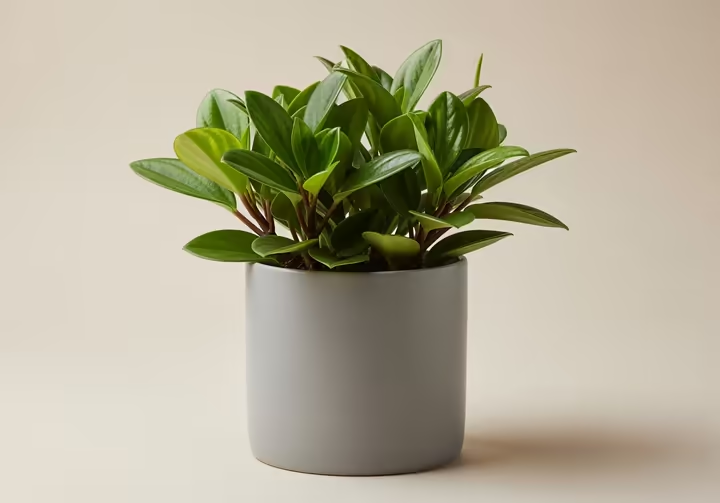
This is the Baby Rubber Plant, or Peperomia obtusifolia if you're fancy. It's a tough, glossy little houseplant that looks good without a lot of fuss. Its secret? It thinks it's still living on a tree in the tropics... and if you treat it that way, you'll get along just fine.
Meet the Baby Rubber Plant
You might know it as the American Rubber Plant or Pepper Face, but whatever you call it, this little guy is a popular houseplant for a reason. Its story starts in the tropical parts of the Americas, like Southern Florida and Mexico, where it often grows as an 'epiphyte'. That's a plant that grows on other plants - usually clinging to tree trunks or logs on the forest floor.
This tree-hugging lifestyle is the key to everything. It explains why the plant has fine roots that like air, and why its leaves store water. It’s used to getting dappled sunlight, a good breeze, and a quick, heavy rain followed by a fast dry-off.
Its scientific name, Peperomia , means "resembling pepper," since it's related to the black pepper plant. The second part, obtusifolia , just means "blunt-leaved." And despite the common name, it's not related to the real Rubber Plant (Ficus elastica) at all, which is great news if you have pets.
What It Looks Like
The Baby Rubber Plant is a small, bushy plant that usually stays under a foot (30 cm) tall and wide, making it perfect for a desk or shelf. It has thick, fleshy stems that are sometimes reddish, especially when new.
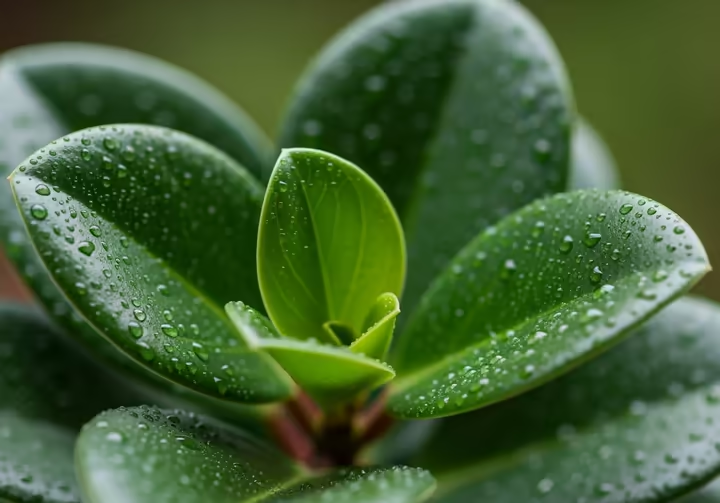
But the real stars are the leaves. They're glossy, oval, and have a thick, leathery texture you can feel. This tough structure isn't just for show, it's a water-storage system that makes the plant a bit like a succulent and helps it handle a little neglect if you forget to water.
So Many Kinds...
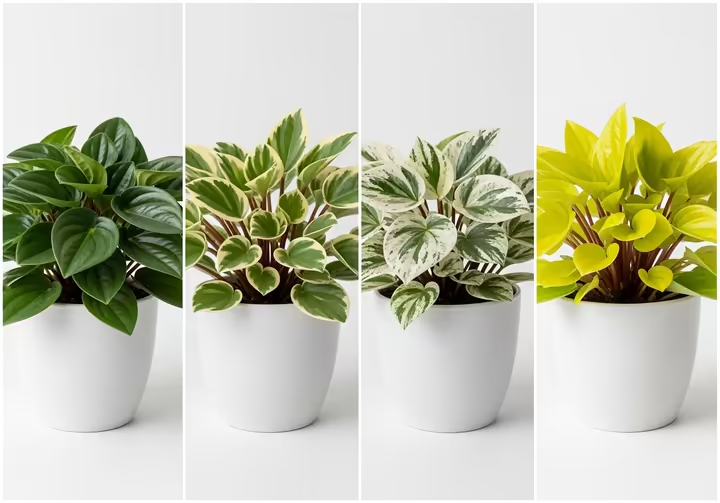
The basic model comes with solid dark green leaves, but gardeners have created a bunch of cool-looking versions, or 'cultivars'. These varieties offer a whole range of colors and patterns.
The most common one is 'Variegata' , with creamy white or pale green splotches on its leaves. 'Marble' has a fancier swirling pattern of cream, white, and green. If you like warmer colors, 'Golden Gate' has leaves with light green, cream, and yellow, often with a thin red edge.
Just remember, the colorful parts of the leaves don't have chlorophyll (the green stuff that makes food from light). This means variegated plants need brighter light than their all-green cousins to stay healthy and vibrant. Not enough light, and those cool patterns will start to fade.
| Cultivar Name | Foliage Description (Color, Pattern, Shape) | Growth Habit Notes | Light Sensitivity |
|---|---|---|---|
| P. obtusifolia (Standard) | Solid, glossy, dark green, oval leaves. | Upright and bushy. | Handles lower light well. |
| 'Variegata' | Green with cream or light green splotches. | Needs bright light to keep its color. | High, needs bright indirect light. |
| 'Marble' | Swirly, marbled patterns of cream, white, and green. | Compact and very decorative. | High, needs bright indirect light. |
| 'Golden Gate' | Marbled light green, cream, and yellow, often with a red edge. | Vibrant and compact. | High, needs bright indirect light for best color. |
| 'Alba' | New leaves are white-yellow, turning green later. | Stems are often reddish. | Needs bright light for new growth. |
| 'Green Gold' | Mottled with creamy white and light green. | Similar to 'Variegata' but with a different pattern. | Prefers bright, indirect light. |
| 'Minima' | Smaller solid green leaves. | Dwarf form, very compact and dense. | Same as the standard plant. |
How to Keep It Happy
Taking care of this plant is easy once you remember its tree-dwelling roots. Just try to copy the conditions of its tropical home, and it'll be fine.
Let There Be (Indirect) Light
Getting the light right is the most important job. This plant needs bright, indirect light. Think of a spot near an east-facing window (for gentle morning sun) or a few feet away from a stronger south- or west-facing window.
Too much direct sun will scorch the leaves, leaving burn marks. Too little light will make it grow slow and 'leggy' (long, stretched-out stems), and any fancy colors on variegated types will fade away.
The Golden Rule of Watering
Here's the tricky part: it's from the humid tropics, but it rots easily if it's too wet. The solution is the "drench and dry" method. When you water, do it thoroughly until water runs out of the pot's drainage holes.
Then, and this is key, let the soil dry out. Stick your finger in, and don't water again until the top half of the soil feels dry. This wet-then-dry cycle keeps the roots healthy and prevents rot.
The Perfect Potting Mix
Because it's an epiphyte, its roots need air. A heavy, dense soil will kill it. You need a loose, chunky, well-draining potting mix.
You can buy a mix for succulents or houseplants, but for an even better result, make your own. Mix regular potting soil (or coco coir) with something to add air, like perlite or pumice. Tossing in some orchid bark makes it even chunkier, which the roots love. And make sure your pot has drainage holes, that's non-negotiable!
Tropical Vibes (Temperature & Humidity)
This plant likes it warm, ideally between 65-75°F (18-24°C). Keep it away from cold drafts or temperatures below 50°F (10°C), or it'll get stressed. It can handle normal house humidity, but it will be even happier if you give it a boost.
You can group it with other plants, place it on a tray of wet pebbles, or use a humidifier. A bright bathroom or kitchen is also a great spot for it.
A Light Snack (Fertilizer)
Baby Rubber Plants are not heavy eaters. During the spring and summer growing season, you can give it a balanced, water-soluble fertilizer once a month. Crucially, dilute it to half the strength recommended on the bottle.
Don't fertilize at all in the fall and winter when its growth slows down. Over-fertilizing can burn its delicate roots, causing leaves to droop and fall off. Less is more here.
Making More Plants
One of the best things about this plant is how easy it is to make more of them from cuttings. It's best to do this in the spring or summer when the plant is actively growing.

Stem Cuttings (The Easy Way)
This is the quickest and most reliable method. Take a healthy stem and, using clean scissors, cut a 3- to 5-inch piece just below a leaf node (the little bump where a leaf grows). Gently pull off the leaves from the bottom half of the cutting to expose a couple of nodes.
You can root it in soil by dipping the cut end in rooting hormone and sticking it in a small pot of moist soil. Or, you can root it in water by placing the cutting in a jar, making sure the nodes are submerged but the leaves are not. Change the water every few days, and once you have roots that are an inch or two long, you can plant it in soil.
Leaf Cuttings (For the Patient)
You can also grow a new plant from a single leaf. Cut a healthy leaf from the plant, making sure to get a small piece of its stem (the petiole). Dip the cut end in rooting hormone and stick it into a pot of moist soil.
Keep it in a warm, bright spot and be patient. It can take a few weeks or even months, but eventually, you'll see tiny new plants sprouting from the base of the leaf.
Those Weird Flower Spikes
If your plant is really happy, it might produce flowers. But they're not what you'd expect. Instead of colorful petals, you get a long, skinny, tail-like spike that's greenish-white.
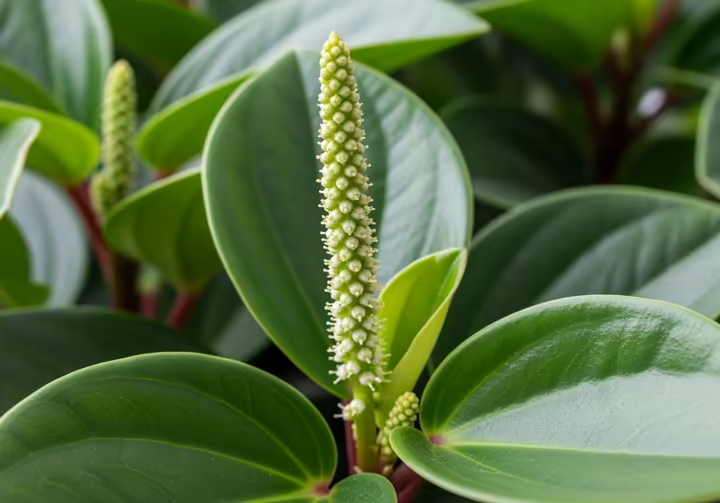
Some people think they're weird and uninteresting, while others find their strange look to be part of the plant's charm. Think of them as a badge of honor, a sign that you're doing a great job. If you don't like them, you can just snip them off at the base to help the plant put its energy into growing more leaves.
Help! What's Wrong With My Plant?
Even though they're tough, things can still go wrong. Usually, the plant's symptoms will tell you exactly what the problem is.
The Yellow Leaf Detective
Yellow leaves are a common cry for help. If the lower leaves are turning yellow and feel soft or mushy, and the soil is always damp, you're overwatering. If leaves are yellowing all over and feel dry and crispy, you're likely underwatering.
If the whole plant is just fading to a pale yellow-green, it might be hungry for some fertilizer (but only in spring/summer!). And if you've been fertilizing a lot and the leaves are yellowing and dropping, you may have overdone it.
Limp, Droopy, or Stretched Out?
Droopy, limp leaves mean the plant can't get enough water. This is caused by two opposite problems: either the soil is bone-dry (underwatering), or the roots have rotted from being too wet and can no longer absorb water (overwatering). Check the soil to figure out which it is.
Long, stretched-out stems with few leaves (leggy growth) is a clear sign your plant needs more light. Move it somewhere brighter and prune back the leggy stems to encourage it to grow back bushier.
Unwanted Guests (Pests)
Pests aren't a huge problem, but you might run into mealybugs or spider mites. Mealybugs look like tiny white cottony fluff, usually hiding where leaves meet the stem. Spider mites are tiny and hard to see, but they leave fine webbing on the plant.
For both, you can wipe them off with a cotton swab dipped in rubbing alcohol for small spots. For a bigger problem, give the plant a good wash and treat it with horticultural soap or neem oil.
Good News for Pet Owners
If you have curious cats or dogs, you can relax. The American Society for the Prevention of Cruelty to Animals (ASPCA) lists Peperomia obtusifolia as non-toxic to cats, dogs, and humans.
While munching on any plant might cause a mild tummy ache, this one isn't poisonous. It's a worry-free choice for a home with furry friends.
Works cited
- Peperomia obtusifolia - Plant Finder - Missouri Botanical Garden, http://www.missouribotanicalgarden.org/plantfinder/PlantFinderDetails.aspx?taxonid=285088
- Peperomia obtusifolia - North Carolina Extension Gardener Plant Toolbox, https://plants.ces.ncsu.edu/plants/peperomia-obtusifolia/
- Peperomia obtusifolia - Wikipedia, https://en.wikipedia.org/wiki/Peperomia_obtusifolia
- FPS466/FP466: Peperomia obtusifolia Peperomia, Baby Rubber Plant - UF/IFAS EDIS, https://edis.ifas.ufl.edu/publication/FP466
- Peperomia obtusifolia (Baby Rubber Plant): All You Need To Know, https://www.gardenia.net/plant/peperomia-obtusifolia
- Peperomia obtusifolia var. obtusifolia (Florida Peperomia) - FSUS - Flora of the Southeastern US, https://fsus.ncbg.unc.edu/main.php?pg=show-taxon-detail.php&taxonid=8966
- Peperomia - University of Arkansas Cooperative Extension Service, https://www.uaex.uada.edu/yard-garden/resource-library/plant-week/peperomia-11-30-12.aspx
- Peperomia obtusifolia 'Marble' - Gabriella Plants, https://www.gabriellaplants.com/products/peperomia-obtusifolia-marble
- www.missouribotanicalgarden.org, http://www.missouribotanicalgarden.org/plantfinder/PlantFinderDetails.aspx?taxonid=285088#:~:text=Also%20commonly%20called%20blunt%2Dleaved,Specific%20epithet%20means%20blunt%2Dleaved.
- Peperomia Obtusifolia: Pretty Little Pepper Face - Epic Gardening, https://www.epicgardening.com/peperomia-obtusifolia/
- Peperomia obtusifolia 'Golden' (Baby Rubber Plant, Blunt-Leaved Peperomia) - The Belmont Rooster, https://thebelmontrooster.com/families-of-familiar-plants/piperaceae-family/peperomia-genus-species/peperomia-obtusifolia-golden/
- How to Grow and Care for Peperomia - Plants by Post, https://www.plantsbypost.com/houseplantcareguides/peperomia
- Peperomia obtusifolia | Plant Care | LiveTrends Design Group, https://livetrends.com/plant-care/peperomia-obtusifolia/
- Peperomia obtusifolia: cultivation & care - Plantura - Plantura Magazin, https://plantura.garden/uk/houseplants/peperomia/peperomia-obtusifolia
- Peperomia 'Marble' | PlantVine, https://www.plantvine.com/product/peperomia-obtusifolia-marble-baby-rubber-plant/
- Peperomia obtusifolia 'Marble' - Creature's Plants & Coffee, https://www.creatures-plants-coffee.com/product/peperomia-obtusifolia-marble-/1246
- Peperomia Obtusifolia 'Golden Gate' - Snakeroot Botanicals, https://snakerootbotanicals.com/collections/plants/products/copy-of-peperomia-obtusifolia-marble
- Peperomia 'Golden Gate' | PlantVine, https://www.plantvine.com/product/peperomia-obtusifolia-golden-gate/
- Golden Gate | Peperomia Obtusifolia Variegatum | Variegated Tropical Plants | Trending Collection | Best Gifts - Etsy, https://www.etsy.com/listing/1813113516/4-pot-peperomia-plants-golden-gate
- How to Grow Peperomia Obtusifolia (Baby Rubber Plant) - The Spruce, https://www.thespruce.com/peperomia-obtusifolia-growing-guide-5271088
- How to Grow and Care for Peperomia Plants - The Spruce, https://www.thespruce.com/peperomia-plant-4584414
- Ultimate Indoor Plant Light Guide - Stauffers of Kissel Hill, https://www.skh.com/blog/indoor-plant-light-guide/
- What Does “Bright Indirect Light” Mean To You? : r/houseplants - Reddit, https://www.reddit.com/r/houseplants/comments/1bd56mr/what_does_bright_indirect_light_mean_to_you/
- What Is Bright Indirect Light? - Mars Hydro, https://www.mars-hydro.com/info/post/bright-indirect-light
- Bright Indirect Light: How to Define It & Why It Matters - Spider Farmer, https://www.spider-farmer.com/blog/bright-indirect-light/
- Ask A Plant Pro: What Does "Bright Indirect Light" Even Mean? (AKA Understanding Light for Plants) - Folia Collective, https://foliacollective.com/blogs/plantknowhow/ask-a-plant-pro-what-does-bright-indirect-light-even-mean-aka-understanding-light-for-plants
- A Guide to Growing Peperomia Plants - Garden Design, https://www.gardendesign.com/houseplants/peperomia.html
- Peperomia Care - Greenery Unlimited, https://greeneryunlimited.co/blogs/plant-care/peperomia-care
- Peperomia Production Guide, https://mrec.ifas.ufl.edu/foliage/folnotes/pep.htm
- How to Water Succulent Plants | Succulents and Sunshine, https://www.succulentsandsunshine.com/how-to-water-succulent-plants/
- 6 Must-Know Tips for Watering Your Succulents - Mountain Crest Gardens, https://mountaincrestgardens.com/blog/6-mustknow-tips-for-watering-your-succulents/
- How to Water Succulents - Everything You Need To Know! - Planet Desert, https://planetdesert.com/blogs/news/how-to-water-succulents-everything-you-need-to-know-about-watering-succulents
- Why does my Peperomia have yellow leaves? - Bloomscape, https://bloomscape.com/common-issue/why-does-my-peperomia-have-yellow-leaves/
- GOLDEN Peperomia Live Plant~Obtusifolia variegata Marble Baby Rubber Plant | eBay, https://www.ebay.com/itm/185835301606
- Peperomia Houseplants | Home & Garden Information Center - HGIC@clemson.edu, https://hgic.clemson.edu/peperomia-houseplants/
- How To Propagate Peperomia In Water Or Soil - Get Busy Gardening, https://getbusygardening.com/propagating-peperomia/
- How to Grow & Care for Peperomia Plants - Gardener's Supply, https://www.gardeners.com/how-to/peperomia-care/9694.html
- How To Propagate Peperomia | Caring For Propagated Peperomia, https://houseplantresourcecenter.com/2022/12/how-to-propagate-peperomia/
- Simple Peperomia Obtusifolia Propagation - SuburbanSill, https://suburbansill.com/peperomia-obtusifolia-propagation/
- Peperomia obtusifolia leaf cutting propagation in water? - Reddit, https://www.reddit.com/r/peperomia/comments/197h0or/peperomia_obtusifolia_leaf_cutting_propagation_in/
- What's Wrong With My Peperomia? Peperomia Troubleshooting Guide, https://houseplantresourcecenter.com/2021/04/whats-wrong-with-my-peperomia-peperomia-troubleshooting-guide/
- How to Treat Underwatering yellow Disease on Watermelon peperomia? - PictureThis, https://www.picturethisai.com/disease/Peperomia-argyreia-Underwatering.html
- Yellowing, agranular bottom leaves of silver frost peperomia - am I underwatering or overwatering? : r/plantclinic - Reddit, https://www.reddit.com/r/plantclinic/comments/mvoiy1/yellowing_agranular_bottom_leaves_of_silver_frost/
- Peperomia Care 101: [Everything You Need to Know] - Intuitive Plants, https://intuitiveplants.org/blogs/houseplant-care-best-practices/peperomia-care-101-everything-you-need-to-know
- Why are the leaves on my Peperomia limp and drooping? - Bloomscape, https://bloomscape.com/common-issue/why-are-the-leaves-on-my-peperomia-limp-and-drooping/
- My first time with Peperomia and it's starting to droop. The leaves and stems are thin and floppy. I did some reading and these symptoms can occur with underwatering AND overwatering. Any tips for diagnosis? : r/IndoorGarden - Reddit, https://www.reddit.com/r/IndoorGarden/comments/1726bpr/my_first_time_with_peperomia_and_its_starting_to/
- Peperomia drooping - what should I do? - Reddit, https://www.reddit.com/r/peperomia/comments/xm70yc/peperomia_drooping_what_should_i_do/
- Answers To Your Questions About Peperomia Plant Care - Joy Us Garden, https://www.joyusgarden.com/answers-to-your-questions-about-peperomia-plant-care/
- Common Peperomia Pests And Diseases - Gardening Know How, https://www.gardeningknowhow.com/houseplants/peperomia/peperomia-problems.htm
- Please help me identify the pests on my friend's baby rubber plant (peperomia obtusifolia) & how to treat it! : r/houseplants - Reddit, https://www.reddit.com/r/houseplants/comments/sx4uvp/please_help_me_identify_the_pests_on_my_friends/
- help! didn't inspect a peperomia I bought last week and it has spider mites! how do I proceed? : r/houseplants - Reddit, https://www.reddit.com/r/houseplants/comments/peq69g/help_didnt_inspect_a_peperomia_i_bought_last_week/
- Blunt Leaf Peperomia | ASPCA, https://www.aspca.org/pet-care/aspca-poison-control/toxic-and-non-toxic-plants/blunt-leaf-peperomia
- Baby Rubber Plant - ASPCA, https://www.aspca.org/pet-care/aspca-poison-control/toxic-and-non-toxic-plants/baby-rubber-plant
- Rhynchophorum | ASPCA, https://www.aspca.org/pet-care/animal-poison-control/toxic-and-non-toxic-plants/rhynchophorum
- Toxic and Non-Toxic Plant List — Cats - ASPCA, https://www.aspca.org/pet-care/animal-poison-control/cats-plant-list
- Toxic and Non-Toxic Plants - ASPCA, https://www.aspca.org/pet-care/aspca-poison-control/toxic-and-non-toxic-plants?dpn=97821&page=46