All About the Ponytail Palm
So you've got a Ponytail Palm, or you're thinking of getting one. Good choice. It's a weird-looking plant with a fat base and a wild hairdo. But there's a secret to this plant that changes everything... and it's the key to not accidentally killing it.
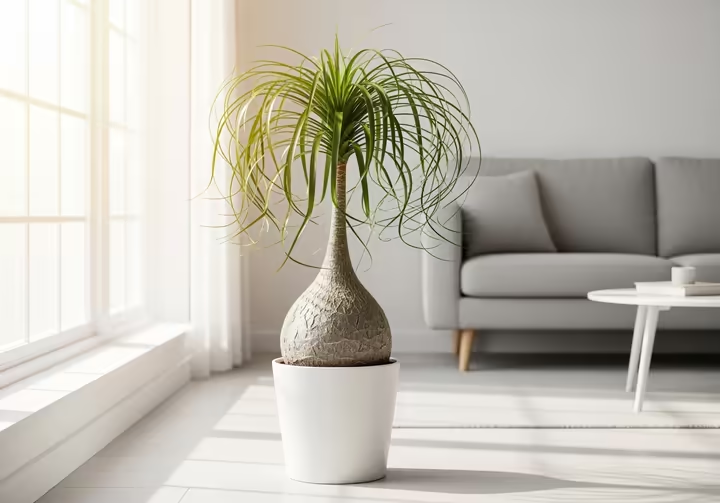
What Is a Ponytail Palm?
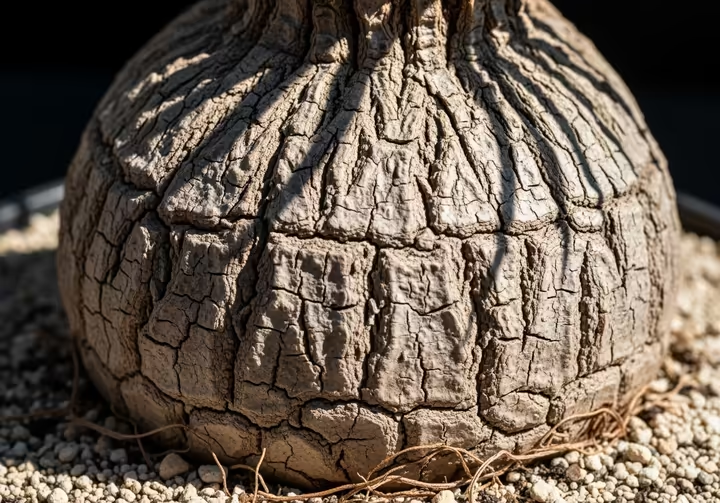
The Ponytail Palm ( Beaucarnea recurvata ) is easy to spot. It has a fat, swollen base, called a caudex, that looks like an onion or an elephant's foot. This base can grow from the size of a baseball to as big as a car tire over its long life.
Out of this thick base grows a thin trunk with a burst of long, ribbon-like leaves on top. The leaves cascade down like a fountain or, well, a ponytail. It’s a very distinct, sculptural look.
Its Secret Identity
Here's the big secret: despite the name, it is not a palm tree. Not even close. It's actually a succulent, in the same family as agaves and yuccas.
This isn't just trivia, it's the most important thing to know about its care. Most people kill them by treating them like thirsty tropical palms. In reality, they come from dry parts of Mexico and are built to survive long droughts.
That fat, swollen base is a personal water tank, letting the plant store moisture for dry spells. In its native habitat, Beaucarnea recurvata is threatened due to habitat loss and over-collection. So, having one in your home is like being a caretaker for a very special, tough little plant.
How to Keep It Alive
The main rule for Ponytail Palms is to mostly leave them alone. Trying too hard will kill it, especially with watering. Once you accept its self-sufficient nature, you'll find it's one of the easiest houseplants you can own.
Light and Location
As a desert native, it loves bright light. A spot near a south or west-facing window is perfect. It will tolerate lower light, but its already slow growth will grind to a halt.
To keep it growing straight, give the pot a quarter turn every month so it doesn't lean toward the sun.
Watering (The Most Important Part)
This is where most people go wrong. The golden rule is to let the soil dry out completely between waterings. Don't even think about watering if the soil is damp.
When it's finally time, use the "soak and dry" method. Drench the soil until water runs out the bottom drainage hole. Then, let it drain completely and dump any extra water from the saucer, letting the plant sit in water is a recipe for root rot.
Not sure if it's dry enough? Stick your finger an inch into the soil. If you feel any moisture, wait. Your plant will also tell you when it's thirsty, the trunk might feel a little soft or look wrinkly. You'll probably only need to water every 2-4 weeks in the summer, and maybe once a month (or less!) in the winter.
Soil and Potting
Ponytail Palms need soil that drains very quickly. A cactus or succulent mix from the store is a great choice. You can also mix your own with one part potting soil, one part perlite, and one part coarse sand.
A pot with a drainage hole is non-negotiable. Terracotta pots are even better, since the porous clay helps pull extra moisture out of the soil.
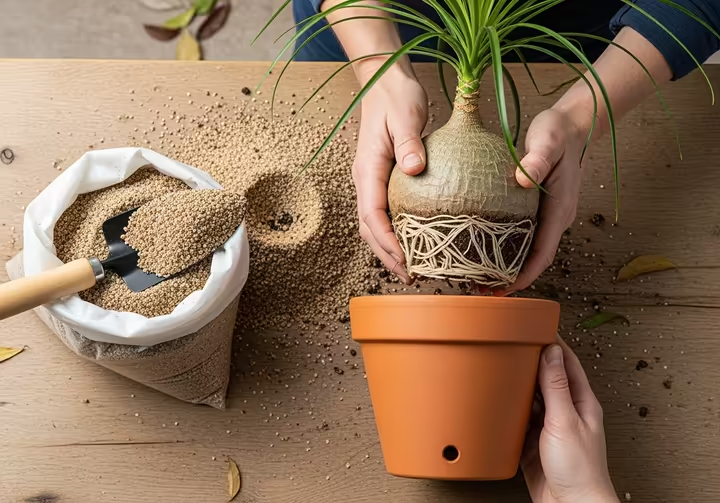
These plants grow slowly and like their roots to be a bit crowded, so you'll only need to repot every two or three years. When you do, pick a new pot that’s only an inch or two wider.
Temperature and Food
Ponytail Palms are happy in average house temperatures (65°F to 85°F). They can handle cooler temps but aren't frost-proof, so keep them away from freezing drafts. They also tolerate dry air just fine, no need for humidifiers.
They don't need much food. During the spring and summer, you can give them a cactus/succulent fertilizer (diluted to half-strength) once or twice. That's it. Don't fertilize at all in the fall and winter.
Common Problems (And How to Fix Them)
Signs of Stress
Even tough plants get stressed. If you see brown leaf tips, it's often just a reaction to the soil getting too dry, or a buildup of minerals from tap water. You can just snip off the brown bits with clean scissors if they bother you.
The one big red flag is overwatering. If the leaves are turning yellow and the base of the trunk feels soft or squishy... that's bad. The base should always be firm like a potato.
A soft base means root rot has likely started. Stop watering immediately. You may need to take the plant out of its pot, cut off any black, mushy roots, and repot it in fresh, dry soil.
Uninvited Guests (Pests)
Ponytail Palms are pretty pest-resistant, but you might get a few visitors. The dense clump of leaves is a great hiding spot. Look out for mealybugs, they look like tiny white cottony fluff where the leaves meet the stem.
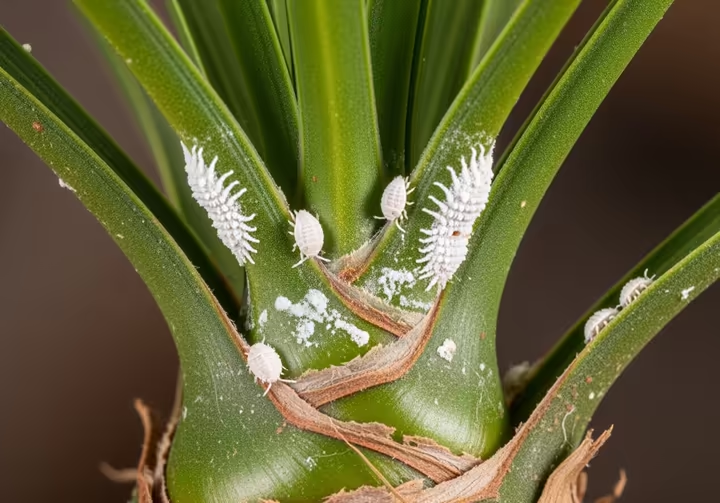
A cotton swab dipped in rubbing alcohol will take care of a small mealybug problem. For spider mites (which cause fine webbing and dusty-looking leaves), give the plant a good spray-down in the shower. Then, treat it with insecticidal soap or neem oil, making sure to get the undersides of the leaves.
Making More Ponytail Palms
The easiest way to propagate a Ponytail Palm is by using the little offshoots, or "pups," that sometimes grow from the main base. You can't use the small branches that grow higher up on the trunk, they won't root.
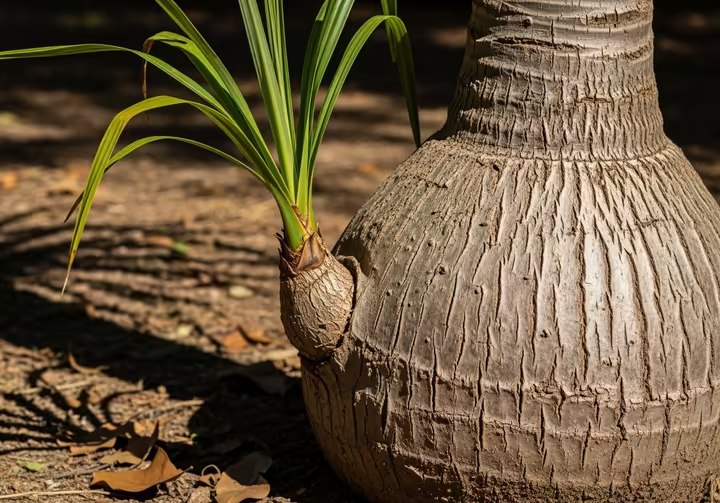
Wait until a pup is at least four inches tall. Use a clean, sharp knife to carefully cut it away from the parent plant, trying to get some of its roots if it has any.
Let the pup sit out for a few days so the cut end can dry and form a callus. This prevents rot. Then, you can dip the callused end in rooting hormone (optional) and plant it in a small pot with cactus mix.
Water it very lightly and put it in a warm spot with bright, indirect light. Now, be patient... it can take weeks or even months for new roots to form.
Are They Safe for Pets?
Good news for pet owners... the Ponytail Palm is non-toxic to cats, dogs, and horses, according to the ASPCA. This makes it a great, worry-free choice for a home with curious animals.
Of course, those long, dangly leaves can look like a fantastic cat toy. While a nibble won't poison them, eating a lot of any plant can cause an upset stomach. It’s still a good idea to put the plant somewhere it won't be constantly chewed on.

Growth and Lifespan
These plants are S-L-O-W. They might grow less than a foot a year. But this is a good thing for a houseplant, it won't outgrow its spot for a very, very long time. Indoors, they might eventually reach 6-8 feet after many years.
What they lack in speed, they make up for in staying power. A well-cared-for Ponytail Palm can live for decades, easily outliving its owner. Some specimens in Mexico are over 350 years old. You're not just buying a plant, you're adopting a potential family heirloom.
Why You Should Get One
So, why get one? First, they just look cool. Their unique, sculptural shape adds a touch of the exotic to any room. They are also incredibly low-maintenance, perfect for beginners or people who forget to water their plants.
On top of that, they are great air purifiers, filtering common household toxins out of the air. In Feng Shui, they're even considered symbols of strength and resilience.
It's a plant that looks great, is safe for pets, cleans your air, and thrives on being left alone. What's not to love?
Works cited
- Plant Highlight: Beaucarnea recurvata - Ruth Bancroft Garden, https://www.ruthbancroftgarden.org/plants/beaucarnea-recurvata/
- Yes, You Can Grow Beaucarnea recurvata (ponytail palm) - Debra Lee Baldwin, https://debraleebaldwin.com/succulent-plants/grow-beaucarnea-recurvata-ponytail-palm/
- Ponytail Palm, Beaucarnea recurvata - Wisconsin Horticulture, https://hort.extension.wisc.edu/articles/ponytail-palm-beaucarnea-recurvata/
- hort.extension.wisc.edu, https://hort.extension.wisc.edu/articles/ponytail-palm-beaucarnea-recurvata/#:~:text=This%20succulent%20is%20often%20mistakenly,in%20containers%20remains%20much%20shorter.
- Beaucarnea recurvata - Find Trees & Learn | UA Campus Arboretum, https://apps.cals.arizona.edu/arboretum/taxon.aspx?id=17
- Beaucarnea recurvata - Wikipedia, https://en.wikipedia.org/wiki/Beaucarnea_recurvata
- Shop 'Ponytail palm - Beaucarnea recurvata' Care and Info | Planet Desert, https://planetdesert.com/products/ponytail-palm-care-beaucarnea-recurvata
- Ponytail Palm Care Guide - Plantology USA, https://plantologyusa.com/blogs/the-plantologist/ponytail-palm-care-guide
- Beaucarnea Recurvata Care Guide: Ponytail Palm Tips - Foliage Factory, https://www.foliage-factory.com/post/the-ultimate-guide-to-beaucarnea-recurvata
- Beaucarnea recurvata (Ponytail Palm) - Gardenia.net, https://www.gardenia.net/plant/beaucarnea-recurvata-pony-tail-palm
- Ponytail Palm | San Diego Zoo Animals & Plants, https://animals.sandiegozoo.org/animals/ponytail-palm
- Ponytail Palm Care & Growing Tips (Easy Care Guide), https://www.joyusgarden.com/ponytail-palm-care/
- Are Ponytail Palms Safe for Cats? - Epic Gardening, https://www.epicgardening.com/ponytail-palm-cats/
- How to Care for a Ponytail Palm | The Sill, https://www.thesill.com/blogs/plants-101/how-to-care-for-a-ponytail-palm
- Ponytail Palm Plant Care - How to Grow Beaucarnea recurvata - Soltech, https://soltech.com/products/ponytail-palm-care
- Ponytail Palm Care - Greenery Unlimited, https://greeneryunlimited.co/blogs/plant-care/ponytail-palm-care
- How to Care for a Ponytail Palm | The Old Farmer's Almanac, https://www.almanac.com/plant/ponytail-palms
- How to Grow and Care for Ponytail Palms - Miracle-Gro, https://miraclegro.com/en-us/indoor-gardening/how-to-grow-ponytail-palms.html
- How Do I Know When to Water My Ponytail Palm? | Bloomscape, https://bloomscape.com/common-issue/how-do-i-know-when-to-water-my-ponytail-palm/
- Ponytail Palm Plant Care Guide & Growing Tips - Plantquility, https://plantquility.com/blogs/plant-care-guide/ponytail-palm
- PonyTail Palm Advice? : r/IndoorGarden - Reddit, https://www.reddit.com/r/IndoorGarden/comments/7q61gw/ponytail_palm_advice/
- Any idea what's going on with my ponytail palm? : r/plants - Reddit, https://www.reddit.com/r/plants/comments/134tq8r/any_idea_whats_going_on_with_my_ponytail_palm/
- How To Care For The Ponytail Palm - Grounded, https://feelgrounded.com/blogs/resources/how-to-care-for-a-ponytail-palm
- Ponytail Palm (Beaucarnea recurvata) Care Guide - Healthy Houseplants, https://www.healthyhouseplants.com/indoor-houseplants/ponytail-palm-beaucarnea-recurvata-care-guide-2/
- Care Instructions For Ponytail Palm - Gardening Know How, https://www.gardeningknowhow.com/houseplants/ponytail-palm/ponytail-palm-care.htm
- Beaucarnea recurvata - Plant Finder - Missouri Botanical Garden, https://www.missouribotanicalgarden.org/PlantFinder/PlantFinderDetails.aspx?taxonid=282253
- How to Treat Mealybugs Disease on Ponytail palm? - PictureThis, https://www.picturethisai.com/disease/Beaucarnea-recurvata-Mealybugs.html
- Treatment of mealy bugs on house plants | NPIN - Lady Bird Johnson Wildflower Center, https://www.wildflower.org/expert/show.php?id=338
- My Ponytail Palm Has Insects and Needs Repotting. Help! - Black Gold, https://blackgold.bz/garden-questions-answered/my-ponytail-palm-has-insects-and-needs-repotting-help/
- Mealybugs | Yard and Garden - Iowa State University, https://yardandgarden.extension.iastate.edu/encyclopedia/mealybugs
- How to Get Rid of Mealybugs In Houseplants Step by Step, https://mycityplants.com/plant-care/how-to-get-rid-of-mealybugs/
- Grow-How® Tip: How To Spot and Treat Spider Mites - Bloomscape, https://bloomscape.com/plant-care/grow-how-tip-how-to-spot-and-treat-spider-mites/
- How To Propagate Ponytail Palm Plants | HRC, https://houseplantresourcecenter.com/2023/06/how-to-propagate-ponytail-palm-plants/
- Propagating Your Ponytail Palm Will Grow Your Plant Collection for Free—Here's How, https://www.thespruce.com/propagate-ponytail-palm-8729808
- Propagation For Ponytail Palm - Flower Shop Network, https://www.flowershopnetwork.com/blog/propagation-for-ponytail-palm/comment-page-1/
- Pony Tail | ASPCA, https://www.aspca.org/pet-care/aspca-poison-control/toxic-and-non-toxic-plants/pony-tail
- Pet Owners: Is Ponytail Palm Toxic to Cats and Dogs? Find Out, https://www.livelyroot.com/blogs/plant-care/ponytail-toxicity
- Is Ponytail Palm Toxic for Your Cat | Intuitive Plants, https://intuitiveplants.org/blogs/houseplant-care-best-practices/is-ponytail-palm-toxic-for-your-cat
- Is this poisonous to cats? : r/whatsthisplant - Reddit, https://www.reddit.com/r/whatsthisplant/comments/162epdi/is_this_poisonous_to_cats/
- Toxic and Non-Toxic Plants - ASPCA, https://www.aspca.org/pet-care/animal-poison-control/toxic-and-non-toxic-plants
- How to Grow and Care for a Ponytail Palm - The Spruce, https://www.thespruce.com/grow-beaucarnea-recurvata-1902886
- How to Care for Ponytail Palm | easyplant, https://easyplant.com/care/ponytail-palm
- Ponytail Palm, Elephant's Foot, Bottle Palm - Beaucarnea recurvata - Gardening in South Africa, https://www.gardeninginsouthafrica.co.za/medium-sized-plants/ponytail-palm-elephant-s-foot-bottle-palm-beaucarnea-recurvata
- Ponytail Palm 101: How to Care for Ponytail Palms - Bloomscape, https://bloomscape.com/plant-care-guide/ponytail-palm/
- Ponytail Palm | Palm Trees For Sale | Including Care Guide - Lively Root, https://www.livelyroot.com/products/ponytail-palm
- Do Ponytail Palms purify the air? - Léon & George, https://www.leonandgeorge.com/faq/do-ponytail-palms-purify-the-air
- Ponytail Palm: Facts, benefits, grow and care tips - Housing, https://housing.com/news/all-about-ponytail-palm/
- The Relaxing Effects of Air-Purifying Plants on Your Home and Mind - Unlimited Greens, https://unlimitedgreens.com/blogs/blog/air-purifying-plants-for-relaxation-how-they-transform-your-home-and-mind