The Unkillable Icon: A Comprehensive Guide to the Snake Plant (Dracaena trifasciata)
Meet the snake plant. It's tough, looks sharp (literally), and is ridiculously easy to grow. This guide tells you everything you need to know to keep yours happy... though it's happy with almost anything.
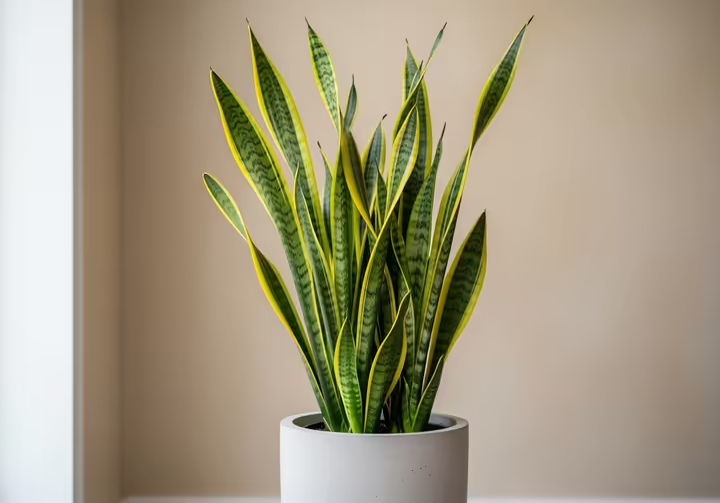
Meet the Snake Plant
You've seen this plant everywhere. Its stiff, pointy leaves look like swords, which is why people call it Mother-in-Law's Tongue or Saint George's Sword. It's super popular because it's nearly impossible to kill. 1
For ages, its fancy name was Sansevieria trifasciata . Then in 2017, scientists looked at its DNA and decided it's actually a Dracaena . 2 So its proper name is now Dracaena trifasciata , but lots of people still call it a Sansevieria (we won't tell). 4
Where It Comes From
The secret to the snake plant's toughness? It comes from dry, tropical parts of West Africa, from Nigeria to the Congo. 2 It's used to rocky places where it might not rain for ages. This is why it doesn't need much water. 8
Everything about it is built for survival. It likes gritty soil like its rocky homeland and can handle a wide range of light, from shady spots to sunny ones. 8 Basically, if you pretend your living room is a West African savanna, your plant will be happy.
How to Keep It Alive (It's Easy)
Its reputation for being low-maintenance is well-deserved. It doesn't thrive on neglect so much as the right kind of neglect.
Light
People say it's a "low-light" plant, but it's more "low-light tolerant" - it'll survive in a dark corner, but it won't be thrilled. 10 For a really happy plant with bright colors, give it plenty of bright, indirect light. 12 Near a window (but not getting scorched by direct sun) is perfect.
Watering
This is the #1 way people kill their snake plants, too much love (and water). Its succulent leaves and underground stems (rhizomes) store water, so it gets root rot easily in soggy soil. 2 Forget a weekly schedule.
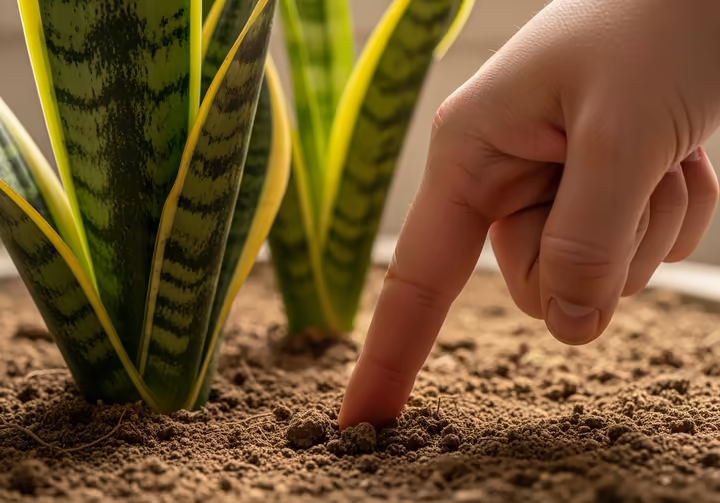
The only rule is to water it when the soil is completely dry - poke your finger in deep to check. 12 When you do water, give it a good soak until water runs out the bottom, then leave it alone. It's always better to underwater than overwater.
Soil and Pots
Snake plants hate wet feet, so they need soil that drains fast. A cactus or succulent mix from the store is perfect. 12 You can even add extra perlite or pumice to make it grittier.
For pots, terracotta is great because it's porous and helps the soil dry out. 12 Make sure your pot has at least one drainage hole, this is non-negotiable. Their roots are strong enough to crack plastic pots, so something sturdy is a good idea. 11
Temperature
It's from Africa, so it likes it warm. Your normal house temperature is totally fine, somewhere between 60°F and 85°F (15-29°C). 18 Just keep it away from cold drafts and don't let it get below 50°F (10°C). 12
Humidity
Don't worry about humidity. It's used to dry air, so your centrally heated home is A-OK. 11 In fact, don't mist it. Water sitting between its leaves can cause rot. 10, 22
Food
This plant isn't a big eater. You can give it a little snack during spring and summer, its growing season. 12 Use a standard houseplant fertilizer diluted to half-strength about once a month. No food in the fall and winter, please, it's sleeping. 12
Making More Snake Plants (For Free!)
One of the best parts about snake plants is how easy they are to propagate. You can make more for yourself or give them to friends.
Division
This is the easiest way and keeps the plant's colors the same. When you repot it, you'll likely see little baby plants or "pups" growing off the main one. 12 Just use a clean, sharp knife to separate a pup with some roots and pot it on its own. 10 Voila, a new plant!
Leaf Cuttings
You can also grow a new plant from just a piece of a leaf. Cut a healthy leaf into a few sections, a couple of inches long. 12 IMPORTANT, remember which end is the bottom, because planting it upside down won't work. 23
Let the cuttings dry for a day to form a callus, which helps prevent rot. 12 Then stick the bottom end in a jar of water or directly into moist soil. 12 It takes one to four months, but eventually you'll see roots. 12
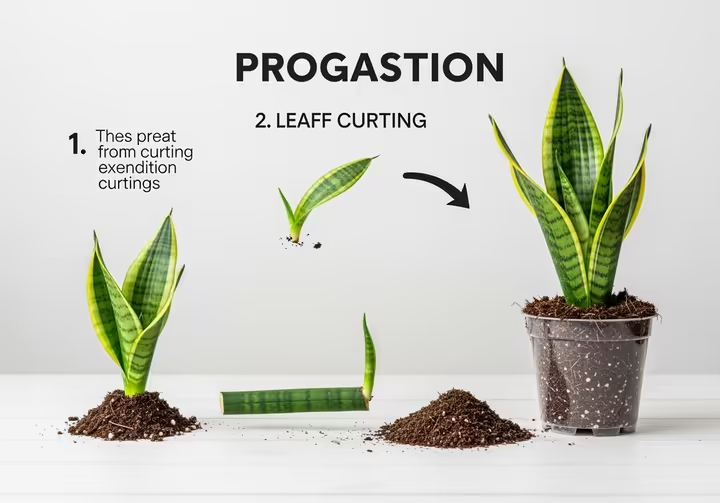
Here's a weird quirk, if you do this with a variegated plant (like the one with yellow edges), the new plant will almost always be solid green. 2 The color is a mutation only in the outer layer of the leaf, so the new growth doesn't have it. 23 If you want a clone, you have to use the division method.
More Than Just a Pretty Face
Air Cleaner
You might have heard this plant cleans the air. A famous 1989 NASA study showed it can remove some nasty chemicals like formaldehyde and benzene from a sealed room. 2, 26 In your house, with air moving around, you'd need a whole jungle of them to make a huge difference. 2 But hey, every little bit helps.
A Good Roommate
Here's the really cool part. Most plants release carbon dioxide at night. The snake plant is special, it releases oxygen at night. 2
This trick, called CAM photosynthesis, is how it adapted to its hot, dry home, it keeps its pores closed during the day to save water. 22 This makes it the perfect plant for a bedroom, helping to freshen the air while you sleep. 30
So Many Kinds!
The snake plant world is huge... Dracaena trifasciata 'Laurentii' is the classic one, tall with flashy yellow edges. 8 The 'Zeylanica' is similar but has cool wavy green stripes instead of yellow. 18
The 'Moonshine' is a stunner, with broad, pale, silvery-green leaves that almost seem to glow. 19 For something smaller, there's 'Hahnii' , the Bird's Nest snake plant. It's short and squat, growing in a little rosette that's perfect for a desk. 20
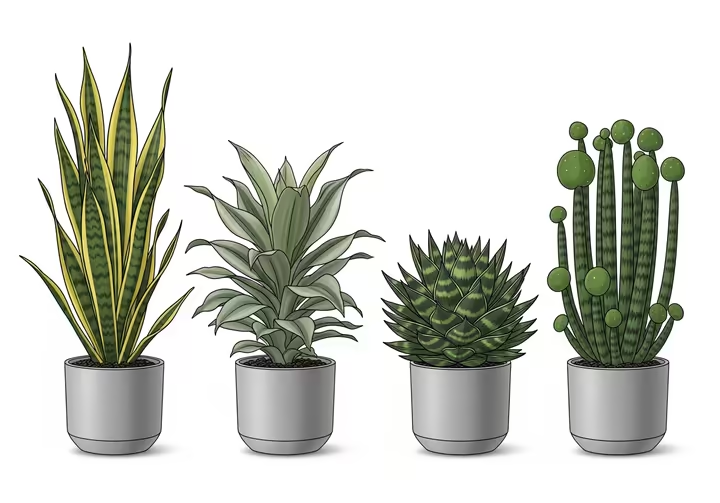
Then there's Dracaena angolensis (also called Sansevieria cylindrica ), the African Spear. Its leaves are round and pointy like spears, growing out in a fan - a real living sculpture. 34
Will It Flower?
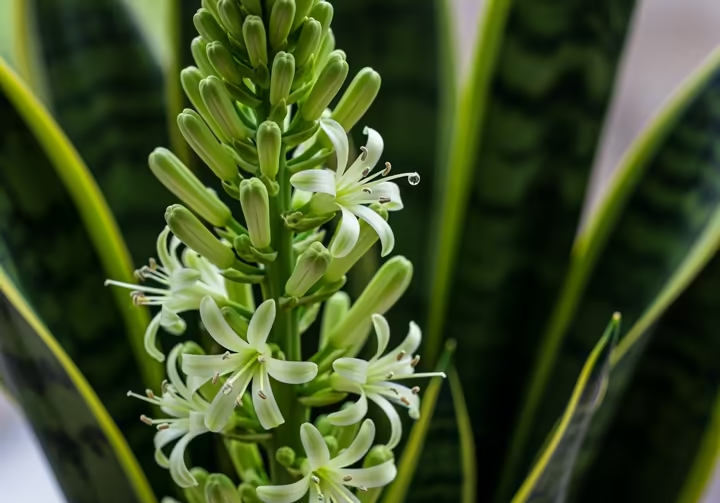
Yes, it can! But don't hold your breath, it's pretty rare indoors. It's usually a sign the plant is mature, healthy, and a little bit root-bound (which it doesn't mind). 11, 35
A long stalk will shoot up from the base, covered in dozens of small, greenish-white or cream-colored blossoms. 2, 36 They often open at night and have a surprisingly sweet, strong smell, like jasmine or lily. 18 You might even see sticky drops of nectar on them. 36
What's Wrong With My Plant?
It's tough, but not invincible. Most problems come down to water. Yellow, mushy leaves at the base? You're overwatering, and that's root rot. 12
If you suspect root rot (it might smell bad), take the plant out of the pot. Cut off any smelly, brown, mushy roots with a clean tool, and repot in fresh, dry soil. 14 Wrinkled, thin, or crispy leaves? It's probably thirsty, so give it a good drink. 14
Pests are rare. If you see white cottony stuff (mealybugs) or tiny webs (spider mites), just wipe the leaves with a damp cloth. 14 For stubborn ones, a bit of insecticidal soap or neem oil should do the trick. 14
A Quick Warning
Just so you know, the snake plant is mildly toxic if eaten. This goes for cats, dogs, and humans. 4, 20 The plant contains compounds called saponins, which can cause an upset stomach, nausea, and vomiting. 8, 38
The leaves are bitter and tough, so most pets leave it alone. But it's best to place it where curious critters and kids can't get to it. 39
The Perfect Plant?
The snake plant really earns its reputation. It looks great, it's tough as nails, and it even makes your bedroom air a little nicer. 8 It's the perfect plant for beginners and experts alike.
Just give it some bright-ish light, forget to water it sometimes, and use soil that drains well. It will be your happy, pointy-leaved friend for years to come.
Works cited
- Dracaena trifasciata (Prain) Mabb. - National Parks Board (NParks), https://www.nparks.gov.sg/florafaunaweb/flora/2/4/2420
- Dracaena trifasciata - Wikipedia, https://en.wikipedia.org/wiki/Dracaena_trifasciata
- Dracaena Vs Snake Plant: Are They The Same? - Family Planting, https://familyplanting.com/blog/dracaena-vs-snake-plant/
- Snake Plant (Dracaena trifasciata) - Costa Farms, https://costafarms.com/blogs/plant-finder/snake-plant
- Dracaena and Sansevieria Plant Care & Info | Foliage Factory, https://www.foliage-factory.com/dracaena-sansevieria
- Dracaena trifasciata, https://botany.fmnc.ac.in/wp-content/uploads/2021/02/Dracaena-trifasciata-edited.pdf
- Name:Snake plant DESCRIPTION Dracaena trifasciata, https://sxcjpr.edu.in/wp-content/uploads/2024/07/snake-plant.pdf
- Dracaena (Sansevieria) trifasciata 'Laurentii' - buy online - Foliage Factory, https://www.foliage-factory.com/dracaena-sansevieria-trifasciata-laurentii
- Dracaena trifasciata (Sansevieria trifasciata) 'Hahnii' | Aquasabi - Aquascaping Shop, https://www.aquasabi.com/Dracaena-trifasciata-Sansevieria-trifasciata-Hahnii
- 1337 – Snake Plant – PlantTalk Colorado, https://planttalk.colostate.edu/topics/houseplants/1337-snake-plant/
- Snake plant: A striking and durable houseplant | UGA Extension ..., https://site.extension.uga.edu/forsyth/2023/07/snake-plant-a-striking-and-durable-houseplant/
- Snake Plant: Care & Growing Guide - The Spruce, https://www.thespruce.com/snake-plant-care-overview-1902772
- How Much Light Does a Snake Plant Need? Expert Tips For Lush Growth, https://www.livelyroot.com/blogs/plant-care/snake-plant-light-requirements
- Snake Plant Care, https://www.whiteflowerfarm.com/snake-plant-care
- Dracaena trifasciata 'laurentii' - Arium Botanicals, https://ariumbotanicals.com/products/dracaena-trifasciata-laurentii
- Sansevieria Houseplant Care: Key Troubleshooting Tips and Notable Varieties - Generosa, https://www.generosanature.com/blogs/plant-library/sansevieria-houseplant-care-key-troubleshooting-tips-and-notable-varieties
- Shop 'Zeylanica Snake Plant - Sansevieria zeylanica' Care and Info | Planet Desert, https://planetdesert.com/products/zeylanica-snake-plant-sansevieria-zeylanica
- Shop Sansevieria Zeylanica Snake Plant, Including Care Guide - Lively Root, https://www.livelyroot.com/products/zeylanica-snake-plant
- How to Grow and Care for Moonshine Snake Plant - The Spruce, https://www.thespruce.com/moonshine-snake-plant-7095618
- Sansevieria trifasciata 'Hahnii' (Snake Plant) - Gardenia.net, https://www.gardenia.net/plant/sansevieria-trifasciata-hahnii-snake-plant
- Sansevieria trifasciata 'Golden Hahnii' (Snake Plant) - Gardenia.net, https://www.gardenia.net/plant/sansevieria-trifasciata-golden-hahniii-snake-plant
- Creative Uses & Care of Snake Plants | AZ SummerWinds, https://www.summerwindsnursery.com/az/inspire/blog/creative-uses-care-of-snake-plants/
- Snake Plant Propagation Methods, https://houseplanthouse.com/2021/01/30/snake-plant-propagation-methods/
- Why Variegated Leaves Turn Green - Melinda Myers, https://www.melindamyers.com/audio-video/melindas-garden-moment-audio-tips/garden-landscape-design/why-variegated-leaves-turn-green
- How do I get the variegation back in my snake plant props? : r/houseplants - Reddit, https://www.reddit.com/r/houseplants/comments/iw1lew/how_do_i_get_the_variegation_back_in_my_snake/
- NASA Clean Air Study - Wikipedia, https://en.wikipedia.org/wiki/NASA_Clean_Air_Study
- NASA Approved Air Purifying Plants | Marcum's Nursery | Goldsby, OK, https://marcumsnursery.com/nasa-approved-plants/
- Snake Plant: Everything You Need To Know - Rolling Nature, https://www.rollingnature.com/blogs/news/snake-plant-everything-you-need-to-know
- Night Breathers: CAM Photosynthesis - Laidback Gardener, https://laidbackgardener.blog/2020/01/24/night-breathers-cam-photosynthesis/
- C3, C4, and CAM plants (article) | Khan Academy, https://www.khanacademy.org/science/biology/photosynthesis-in-plants/photorespiration--c3-c4-cam-plants/a/c3-c4-and-cam-plants-agriculture
- C3, C4, CAM Photosynthesis - Henry Shaw Cactus and Succulent Society, https://hscactus.org/resources/digest/plant-info/c3-c4-cam/
- Dracaena trifasciata (Golden Birds Nest, Good Luck Plant, Mother-in ..., https://plants.ces.ncsu.edu/plants/dracaena-trifasciata/
- Shop 'Moonshine Snake Plant - Sansevieria moonshine' Care and Info | Planet Desert, https://planetdesert.com/products/moonshine-snake-plant-sansevieria-moonshine
- Dracaena angolensis - Wikipedia, https://en.wikipedia.org/wiki/Dracaena_angolensis
- www.marthastewart.com, https://www.marthastewart.com/how-to-get-snake-plant-to-bloom-11741131#:~:text=of%20the%20process.-,When%20Snake%20Plants%20Bloom,indirect%20light%20and%20temperature%20changes.
- How to Get Your Snake Plant to Bloom - Martha Stewart, https://www.marthastewart.com/how-to-get-snake-plant-to-bloom-11741131
- 7 snake plant problems – and expert advice to solve them | Homes ..., https://www.homesandgardens.com/gardens/snake-plant-problems
- Snake Plant | ASPCA, https://www.aspca.org/pet-care/aspca-poison-control/toxic-and-non-toxic-plants/snake-plant
- Is Snake Plant Poisonous? | Plant Addicts, https://plantaddicts.com/is-snake-plant-poisonous/
- Snake Plant | ASPCA, https://www.aspca.org/pet-care/animal-poison-control/toxic-and-non-toxic-plants/snake-plant