A Guide to Ferns
Ferns are old. Like, dinosaur-old. They don't have flowers or seeds, but they do have weirdly named parts and a talent for making any room look like a miniature jungle. Here's what you need to know about them.
The Oldest Plants on the Block
Ferns were greening up the planet long before flowers ever showed up. These plants are living fossils, with records stretching back over 360 million years. 1 That means they were here before the dinosaurs.

Back in the Carboniferous period, giant fern forests covered the Earth. As these massive plants died, they got buried and eventually became the coal and natural gas we use today. 1 So yeah, the energy in your car is basically sunshine captured by a fern millions of years ago.
They’re tough, too. A Stegosaurus might have munched on them for lunch, and they survived the asteroid that wiped out all their dinosaur friends. 4 In fact, ferns were some of the first plants to grow back after the big kaboom. 7
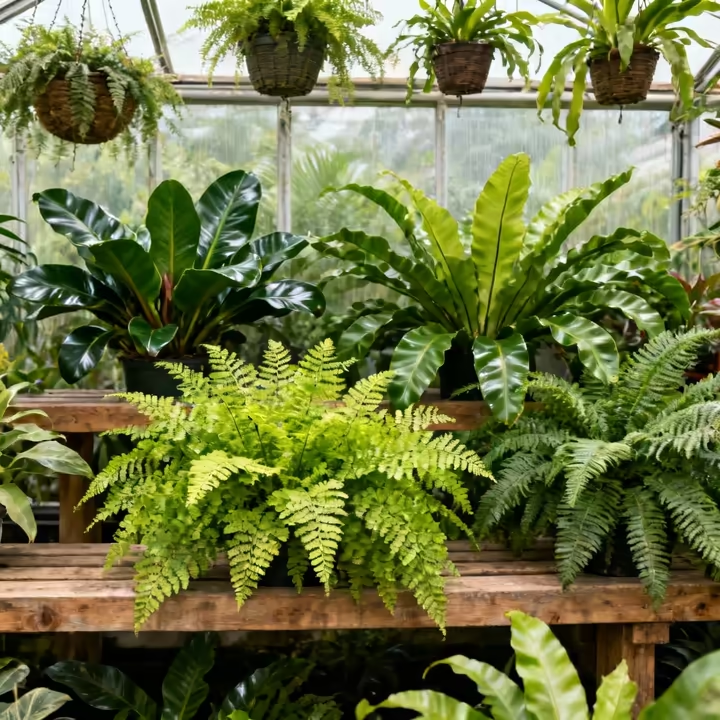
Their appeal comes from this ancient vibe and their incredible variety. Some look like delicate lace (Maidenhair ferns), while others have big, solid leaves (Bird's Nest ferns). 2 This makes them perfect for adding a bit of lush, green texture to just about any space.
Learning the Lingo
The common name for these plants is just... "fern." That one word covers thousands of species in the scientific class Polypodiopsida (try saying that five times fast), which is part of a bigger group called Pteridophyta . 9
What really makes a fern a fern is how it makes more ferns. They don't do flowers or seeds. Instead, they reproduce using tiny, dust-like spores. 3
Basic Fern Parts
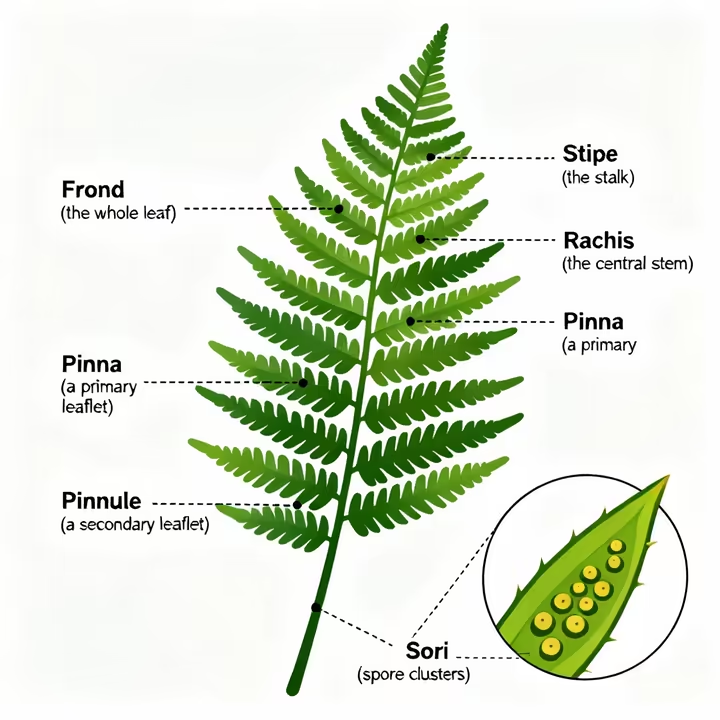
A fern's leaf is called a frond . 13 The frond has a stalk (the stipe ) and a leafy blade. The main stem running through the middle of the blade is the rachis , and the little leaflets branching off it are pinnae . 15
On some ferns, those pinnae are divided into even smaller bits called pinnules , which is what gives them that classic feathery look. 15 New fronds start out as tightly coiled spirals called fiddleheads or croziers, named because they look like the end of a violin. 4 Be nice to the fiddleheads, they're fragile.
Fronds grow from a special kind of stem called a rhizome , which usually creeps along or just under the soil. 15 A short, clumping rhizome gives you a dense tuft of fern, while a long, creeping one will spread out or trail over the side of a pot. 16
Flip a frond over, and you might see little clusters of spore cases. These are called sori (one is a sorus ) and can look like dots or lines. 16 They are not a disease or a pest infestation... they're a sign of a healthy, grown-up fern ready to make babies.
Ferns for Your House
Ferns are great for bringing a bit of the forest indoors. The key is knowing what kind you have. Some are terrestrial (they grow in soil) and others are epiphytic (they grow on other plants, like trees). This one difference explains almost everything about how to care for them.
The Boston Fern (Nephrolepis exaltata)
You've probably seen a Boston Fern. It has long, arching fronds up to three feet long, covered in little sword-shaped leaflets that make it look super full and feathery. 20, 22 They look great in hanging baskets or on a stand where their fronds can hang down.
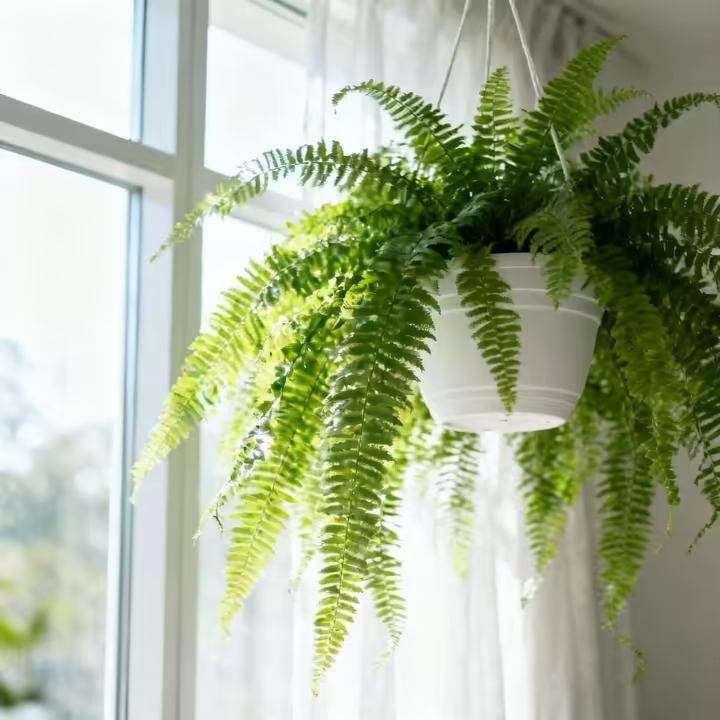
This fern likes bright, indirect light, like near an east-facing window. 23 Keep its soil moist but not soggy, watering whenever the top inch feels dry. 22, 24 The most important thing is humidity, they love it (50-80% is ideal). 22 Put it in a bathroom, use a pebble tray, or get a humidifier, otherwise you'll get brown, crispy tips. 24
Besides looking good, the Boston Fern also purifies indoor air and is non-toxic to pets and kids. 21 A solid choice.
The Maidenhair Fern (Adiantum)
This is the pretty, delicate one. It has fan-shaped leaflets that seem to float on thin, black stems, giving it a light, airy look. 26 People think it's a diva because it has one major rule...
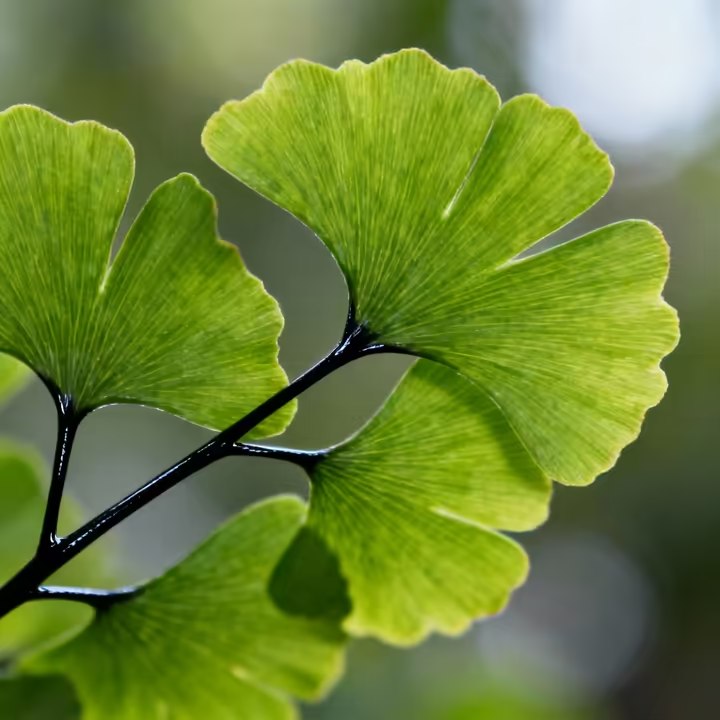
...it must NEVER dry out. Seriously. If the soil goes completely dry, the fronds will shrivel into a crispy mess almost overnight. 29 You have to keep the soil evenly moist all the time, which might mean checking it daily. 27
It also likes bright, indirect light and a warm spot away from drafts, between 65-75°F. 26, 28 If you can keep up with its drinking habit, the Maidenhair Fern is one of the most beautiful plants you can own.
The Bird's Nest Fern (Asplenium nidus)
This one doesn't look like a typical fern. Instead of lacy fronds, it has wide, spear-shaped leaves with wavy edges. 31 They grow out from the middle in a circle, looking like a little green bird's nest. 31
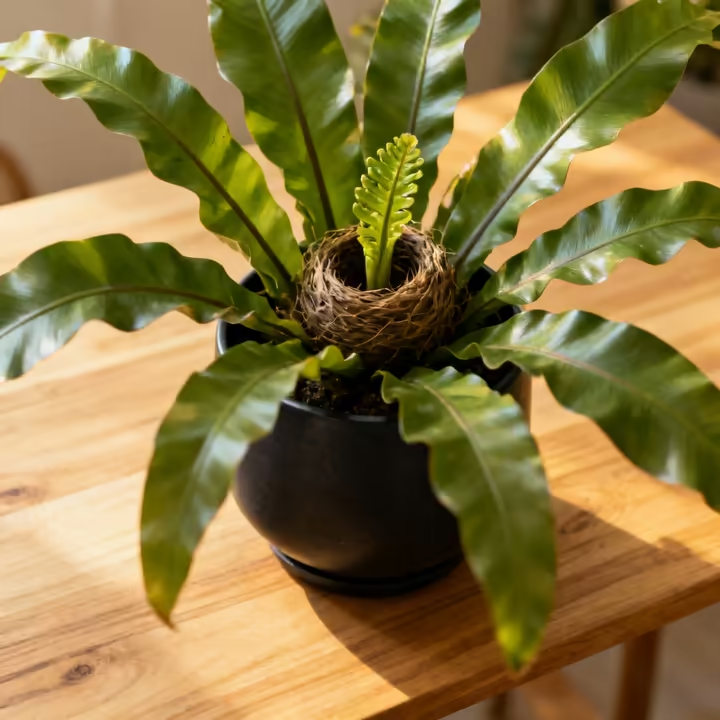
In the wild, this fern is an epiphyte, meaning it grows on trees instead of in the ground. 31 That's why it needs a very loose, airy potting mix at home, like an orchid mix. 32 It can handle lower light than other ferns, though it'll grow slower. 31
The most important tip: water the soil, not the plant. Pouring water into the central "nest" can make it rot, which will kill it. 31 It's a tough, non-toxic plant that won't outgrow its pot too quickly, making it a great, low-maintenance choice. 31
The Staghorn Fern (Platycerium)
This fern looks like living art. It's an epiphyte that's usually grown mounted on a piece of wood, just like it would grow on a tree trunk. 37 It has two kinds of fronds. The first are small, flat "shield" fronds that protect the roots, they turn brown and papery but don't remove them, they're important. 37
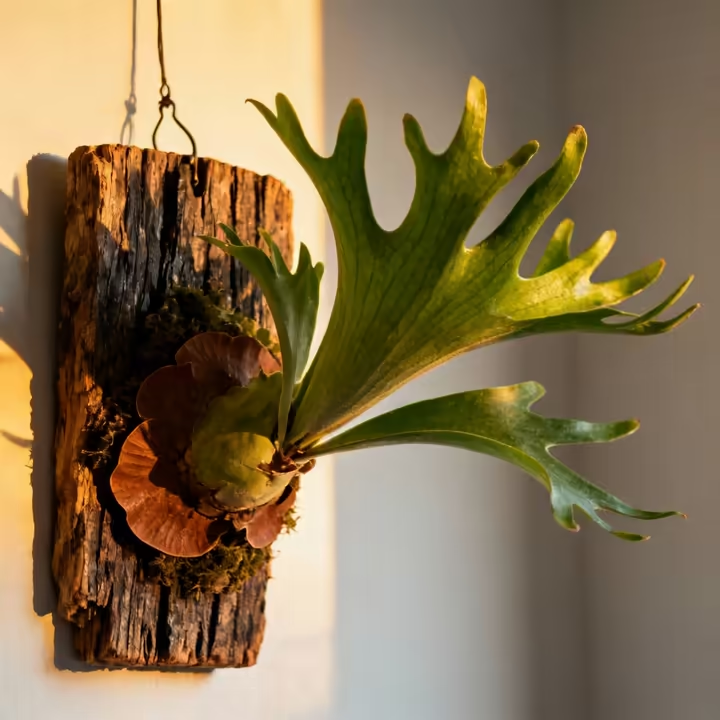
The second kind are the big, showy fronds that look like the antlers of a stag or elk, which is where it gets its name. 39 It needs more light than most ferns, so give it a spot with bright, indirect sun. 38
To water it, take the whole thing to the sink and soak the root ball and shield fronds for 10-20 minutes, then let it drip dry completely before hanging it back up. 37, 40 Do this about once a week in summer, and less in winter. 37 It's a non-toxic showstopper. 38
The Rabbit's Foot Fern (Davallia fejeensis)
The fronds are pretty, lacy, and triangular, but that's not why people love this fern. 43 The main attraction is its rhizomes, which are thick, fuzzy, and light-brown. They creep over the edge of the pot and look just like a rabbit's foot. 43
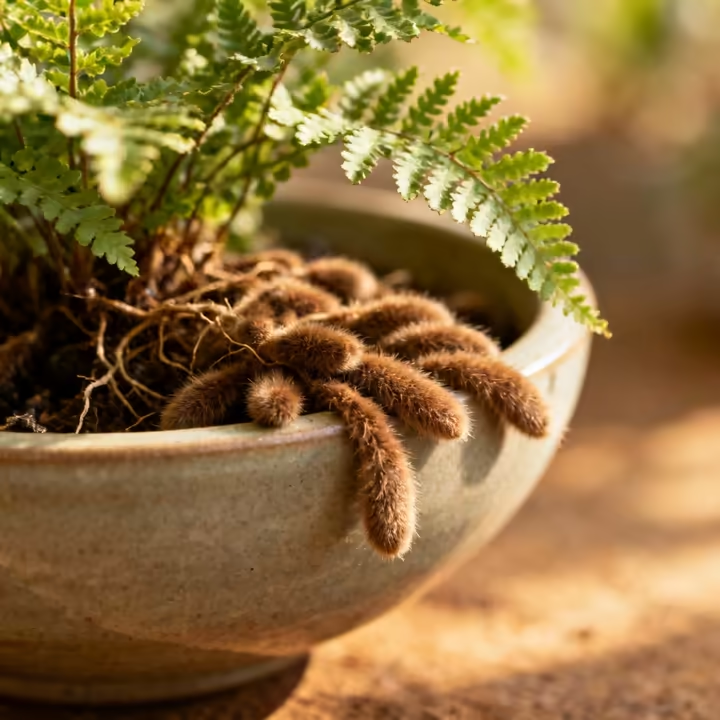
It's an epiphyte, so it needs a very airy potting mix. 44 Give it bright, indirect light and keep the soil moist. 43, 44 The fuzzy rhizomes can actually absorb moisture from the air, so they love being misted regularly along with the fronds. 43
The Button Fern (Pellaea rotundifolia)
A perfect little fern for small spaces. It has a low, trailing habit with wiry fronds. 45 Its leaflets are small, round, and leathery, looking like little green buttons strung along the stems.

It's a bit tougher than other ferns and can handle slightly drier air. 45 But don't let it dry out completely, the soil should stay moist. It does need high humidity to keep its "buttons" from getting brown edges, so misting is a good idea. 45 Its small size makes it a great plant for a desk, bookshelf, or terrarium.
Ferns for Your Garden
Lots of ferns are happy to live outside, turning shady spots into lush green getaways. They add great texture next to plants with big leaves, like hostas. Just be sure to pick the right one, some stay in a neat clump, while others like to spread out and take over.
The Ostrich Fern (Matteuccia struthiopteris)
This fern is a giant for the shade garden, growing in a big, vase-shaped clump up to six feet tall. 47 Its huge, arching fronds look like ostrich feathers. 48 In the spring, it produces edible fiddleheads, a fancy treat if you cook them. 48
It loves shady, wet spots with rich soil, think riverbanks or bogs. 47, 48 But be warned: this fern is aggressive. It spreads fast with underground rhizomes and will form a dense colony, so give it plenty of space or use barriers to keep it contained. 50 It's hardy in USDA zones 3-7. 52
The Japanese Painted Fern (Athyrium niponicum)
This fern is all about color. Its fronds are a cool mix of silvery-gray, blue-green, and a deep purple or burgundy stripe down the middle. 53 It's a great way to brighten up a dark corner of the garden.
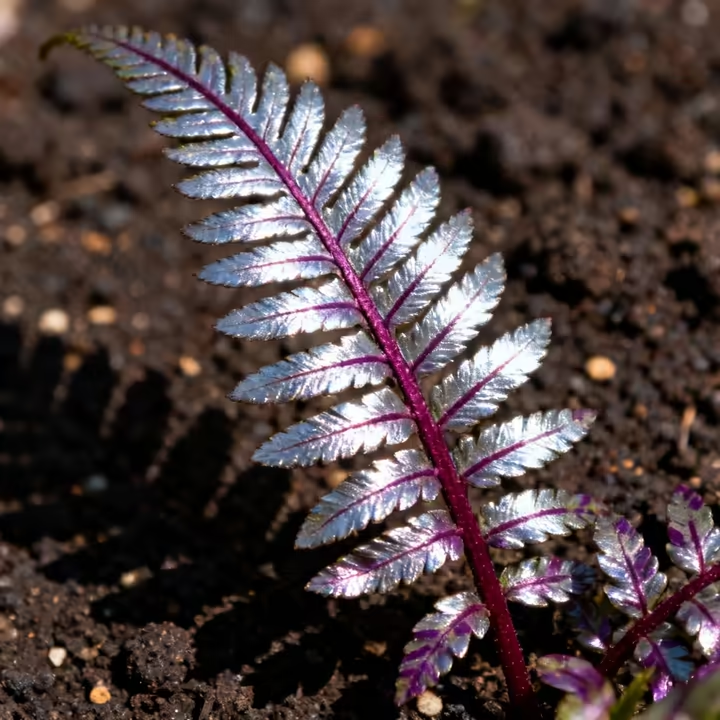
It stays in a tidy clump, growing about 18-24 inches tall and wide. 53 For the best color, plant it in light to partial shade. 53 It needs rich, moist, well-drained soil and doesn't like to dry out. 54 It's hardy in USDA zones 3-9 and deer tend to leave it alone. 54
The Christmas Fern (Polystichum acrostichoides)
The best thing about this fern is that it's evergreen. The tough, dark green fronds stick around all winter, which is how it got its name, people used it for holiday decorations. 58 Its little leaflets are shaped like tiny Christmas stockings. 58
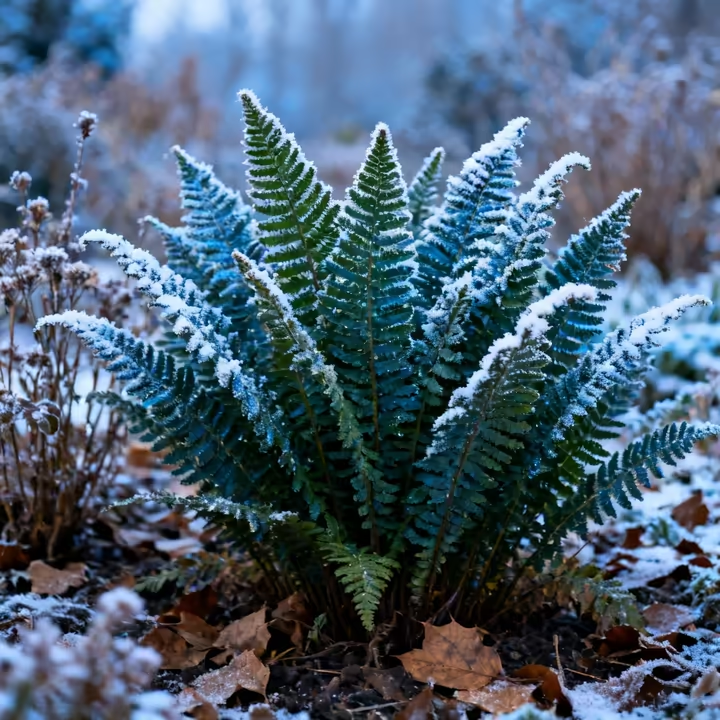
This fern is super adaptable. It forms a neat clump and doesn't spread aggressively. 58 It's happy in shade and can handle a wide range of soils, it's even drought-tolerant once it's established. 58 Hardy in USDA zones 3-9, it's a reliable, low-maintenance choice for year-round green. 60
The Cinnamon Fern (Osmundastrum cinnamomeum)
This big fern gets its name from its fertile fronds. 63 In the spring, stiff, narrow fronds covered in cinnamon-brown fluff pop up in the middle of the plant. 63 Soon after, the normal big, bright green fronds unfurl around them, growing up to five feet tall in a vase shape. 63 The green fronds turn a nice yellow in the fall. 63
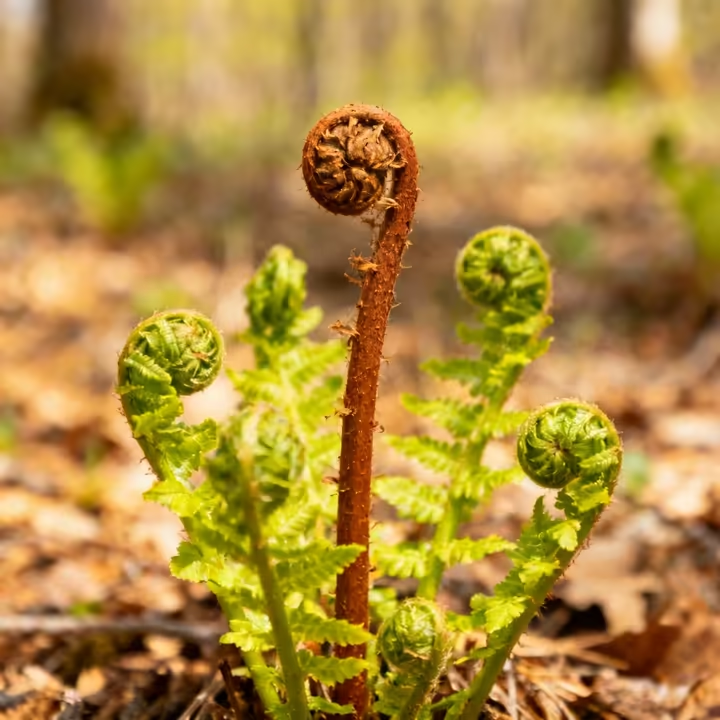
It loves moisture, so it's perfect for wet spots like rain gardens or pond edges. 63 It needs rich, acidic soil and partial to full shade. 63 It will form large clumps over time but isn't considered invasive. Hardy in USDA zones 3-10. 64, 65
The Lady Fern (Athyrium filix-femina)
The Lady Fern looks soft and delicate, but it's tougher than you'd think. It forms a dense clump of lacy, bright green fronds that grow two to three feet tall. 68 Its super fine texture looks great next to plants with bolder leaves. 69
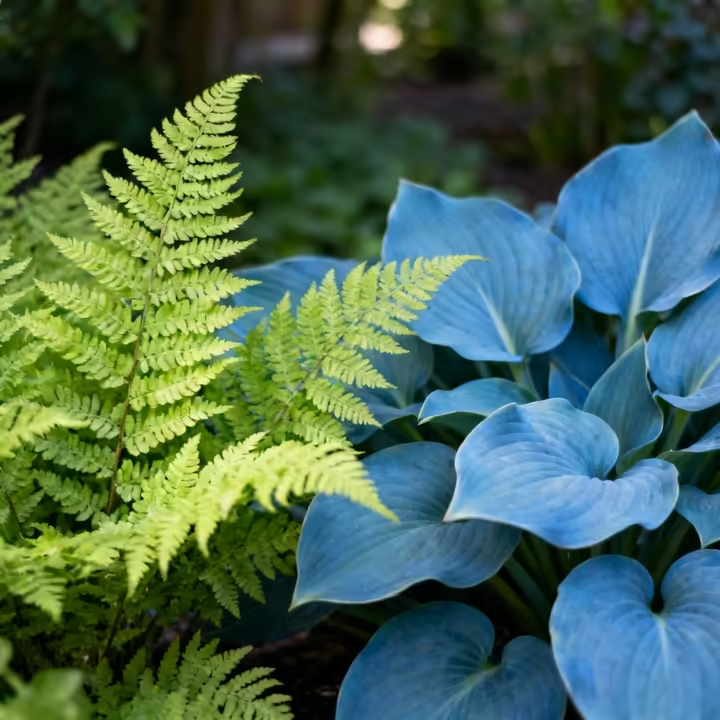
This is one of the easiest garden ferns to grow. It likes shade and moist soil, but it can handle more sun than most ferns (if the soil stays wet) and can tolerate drier soil once it's established. 68, 69 It's a fast-growing, reliable fern for almost any shady spot. Hardy in USDA zones 4-8. 69
The Main Fern Families
Ferns have evolved to live in all sorts of places, from rainforest canopies to ponds. Looking at these main groups shows just how adaptable they are. Understanding their lifestyle is the real key to taking care of them.
Tree Ferns
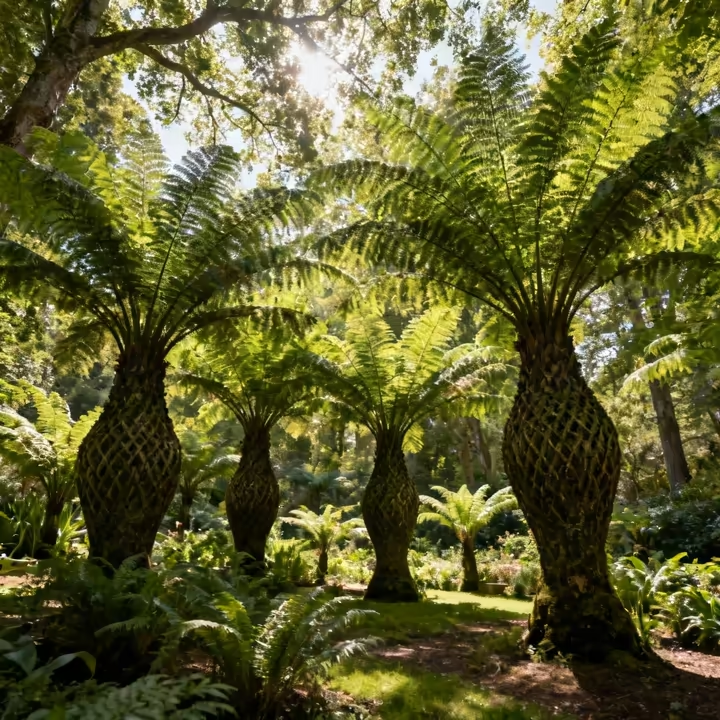
Just like the name says, these are ferns that grow like trees. They have a vertical trunk with a big crown of fronds at the top, some can get over 60 feet tall. 8 The "trunk" isn't wood, it's a tough, upright rhizome wrapped in a thick mat of roots. 73 The most common types are Dicksonia and Cyathea . 73 They give any garden an instant prehistoric, jungle feel.

Epiphytic Ferns
An epiphyte is a plant that grows on another plant (like a tree) without harming it. 78 They do this to get better light than they would on the dark forest floor. They get all their water and food from rain, the air, and any dead leaves that fall on them. 44

Many popular houseplants are epiphytes, like the Bird's Nest Fern and Staghorn Fern. 78 This is why they need airy, soilless potting mixes and love high humidity, it's just like home for them.
Aquatic Ferns
Some ferns gave up on land and decided to live in the water. They might float on the surface or be rooted in the mud of a pond or stream. 81 Many don't look like ferns at all.
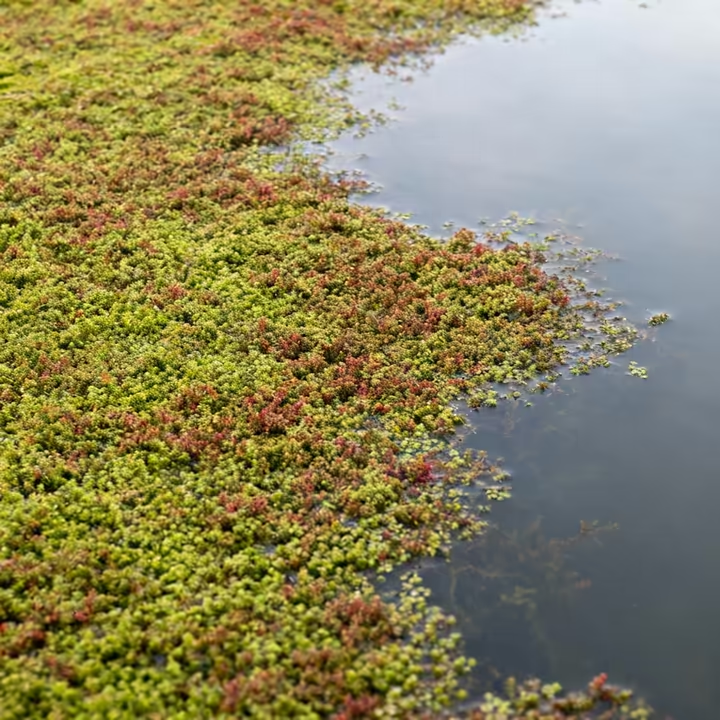
Mosquito Fern ( Azolla ) and Water Spangles ( Salvinia ) are tiny floating plants that can cover a pond's surface. 84 Others, like Java Fern ( Microsorum pteropus ), grow completely underwater and are popular in aquariums. 86
How Not to Kill Your Fern
Most common indoor ferns want the same basic things because they all evolved in shady, moist forests. If you can copy those conditions at home, you'll be fine. When something goes wrong, it's almost always a problem with humidity, water, or light.
Humidity is Everything
The dry air in our homes is the biggest enemy of most ferns. They come from rainforests where the air is always damp. 45 When humidity drops, the tips of the fronds get brown and crispy because they lose water faster than the roots can suck it up. 88
To fix this, put your fern in a bathroom or kitchen. 45 You can also group plants together or place the pot on a tray of pebbles and water. The best solution, especially in winter, is to run a humidifier nearby. 45
The Right Way to Water
The rule for ferns is "moist, but not soggy." Letting the soil dry out completely will lead to crispy, wilting fronds. 89 But keeping the soil soaked is even worse, it will drown the roots and cause them to rot. 92
Check the soil with your finger. When the top inch feels a little dry, it's time to water. Pour water in until it runs out the drainage holes, then dump out any extra water from the saucer. Using rainwater or distilled water is a nice bonus, as some ferns are sensitive to tap water. 45
Getting the Light Right
Ferns are "shade plants," but a dark corner in your house is usually too dark. Most ferns need bright, indirect light. 45 Think of the dappled light on a forest floor.
A spot near a north or east-facing window is perfect. Too much direct sun will scorch the fronds and turn them yellow or brown. 45 Too little light will lead to slow, spindly growth and pale leaves. 45
Common Problems and Fixes
If your fern looks sad, it's time to play detective. Here are the usual suspects.
Crispy, brown tips? This is usually a water problem. If the soil is dry, you're underwatering. 89 If the soil is moist but the air is dry, you need more humidity. 88 It could also be sunburn if the plant is in direct light. 92
Yellow, limp fronds? You're probably overwatering. 89 If the soil is soggy and smells musty, you may have root rot. You'll need to repot the plant in fresh soil, trimming off any brown, mushy roots first. 93 Then, water less often.
Bugs? Pests can sometimes show up. Scale insects look like tiny, hard brown bumps that don't move. 95 Mealybugs are tiny, white, cottony blobs that hide in crevices. 95 Spider mites are almost invisible, but you'll see their fine, silky webs on the plant. 96 You can wipe off small numbers of pests with a cotton swab dipped in rubbing alcohol. For bigger problems, spray the plant with insecticidal soap or neem oil. 96
Works cited
- About Ferns - American Fern Society, https://www.amerfernsoc.org/about-ferns
- Fern fossils | Earth Sciences Museum | University of Waterloo, https://uwaterloo.ca/earth-sciences-museum/resources/history-life/carboniferous-period/pennsylvanian-sub-period/fern-fossils
- Polypodiopsida Cronquist, Takht. & W.Zimm. - GBIF, https://www.gbif.org/species/113551061
- ferns: prehistoric plants - Somerset County 4-H, https://4histops.org/nature-inspired/ferns
- Unfurl the secrets of ferns | Natural History Museum, https://www.nhm.ac.uk/discover/ferns.html
- Dinosaur Salad - Ancient Extant Ferns - Canada (Ontario) Beneath Our Feet, https://www.ontariobeneathourfeet.com/dinosaur-salad-ancient-extant-ferns
- The World According to Ferns | The Outside Story - Northern Woodlands magazine, https://northernwoodlands.org/outside_story/article/ferns
- Tree fern | Growing, Propagation & Maintenance - Britannica, https://www.britannica.com/plant/tree-fern
- en.wikipedia.org, https://en.wikipedia.org/wiki/Fern#:~:text=In%20the%20Pteridophyte%20Phylogeny%20Group,and%20an%20estimated%2010%2C578%20species.
- Pteridophytes: classification - Ferns of Africa, https://www.fernsofafrica.com/aboutclass.php
- Pteridophyte - Wikipedia, https://en.wikipedia.org/wiki/Pteridophyte
- Fern Reproduction - UC Botanical Garden at Berkeley, https://botanicalgarden.berkeley.edu/learn/garden-stories/fern-reproduction/
- About ferns, https://flnps.org/buttermilk/BFSP_Plant-Finder/3_ferns/about_ferns.htm
- Frond | Overview & Structure - Study.com, https://study.com/academy/lesson/frond-definition-lesson.html
- Polypodiopsida Cronquist, Takht. & Zimmerm - Field Museum, https://www.fieldmuseum.org/polypodiopsida-cronquist-takht-zimmerm
- Fern Structure - USDA Forest Service, https://www.fs.usda.gov/wildflowers/beauty/ferns/structure.shtml
- Fern - Spore, Rhizome, Frond | Britannica, https://www.britannica.com/plant/fern/Vascular-tissues
- botanicalgarden.berkeley.edu, https://botanicalgarden.berkeley.edu/learn/garden-stories/fern-reproduction/#:~:text=The%20fern%20reproduction%20cycle%20begins%20with%20the%20asexual%20spores%2C%20which,often%20arranged%20in%20distinctive%20patterns.
- How to grow ferns from spores | Jack Wallington | Nature & Gardens, https://www.jackwallington.com/how-to-grow-ferns-from-spores/
- Boston Fern Care: Complete Guide To Growing Boston Ferns - Gardening Know How, https://www.gardeningknowhow.com/houseplants/boston-fern/boston-fern-care.htm
- Nephrolepis exaltata (Boston Fern) - Gardenia.net, https://www.gardenia.net/plant/nephrolepis-exaltata
- Comprehensive Boston Fern Care Guide: From Watering to Lighting, https://www.livelyroot.com/blogs/plant-care/boston-fern-care
- Boston Fern, Nephrolepis exaltata 'Bostoniensis' - Master Gardener Program, https://mastergardener.extension.wisc.edu/files/2015/12/BostonFern.pdf
- How to Care for Boston Fern (Nephrolepis) - Expert Tips for Thriving Plants, https://plnts.com/en/care/houseplants-family/nephrolepis
- Boston Fern: Care and Growing Guide - Healthy Houseplants, https://www.healthyhouseplants.com/indoor-houseplants/boston-fern-care-and-growing-guide/
- Adiantum Plant Care Guide | Maidenhair Fern - The Stem, https://thestem.co.uk/plant-academy/a-z-of-plants/adiantum-plant-care-guide
- Complete guide to maidenhair fern care - Patch Plants, https://www.patchplants.com/pages/plant-care/complete-guide-to-maidenhair-fern-care/
- How to Grow and Care for Maidenhair Fern Indoors - The Spruce, https://www.thespruce.com/grow-adiantum-ferns-1902722
- Maidenhair Fern Care – Not That Delicate - House Plant Journal, https://www.houseplantjournal.com/maidenhair-fern-care/
- Maidenhair Fern: Complete Plant Care & Growing Guide - Gardening Know How, https://www.gardeningknowhow.com/ornamental/foliage/maidenhair-fern/maidenhair-fern-care.htm
- How to Grow & Care For a Bird's Nest Fern - Gardener's Supply, https://www.gardeners.com/how-to/birds-nest-fern-care/9726.html
- Nidus Bird's Nest Fern - Plant Addicts, https://plantaddicts.com/nidus-birds-nest-fern
- Shop 'Bird's Nest Fern - Asplenium nidus' Care & Info | Planet Desert, https://planetdesert.com/products/birds-nest-fern-asplenium-nidus
- How to Care for Bird's Nest Fern - Succulents Box, https://succulentsbox.com/blogs/blog/how-to-care-for-bird-s-nest-fern
- Bird's Nest Fern (Asplenium nidus) Guide | Our House Plants, https://www.ourhouseplants.com/plants/bird-nest-fern
- How to Grow and Care for Bird's Nest Fern, https://www.thespruce.com/grow-asplenium-nidus-ferns-1902716
- How to Grow and Care for Staghorn Ferns - The Spruce, https://www.thespruce.com/grow-platycerium-species-1902725
- What You Need To Know Before You Buy A Staghorn Fern — Plant Care Tips and More, https://blog.leonandgeorge.com/posts/what-you-need-to-know-staghorn-fern
- Staghorn Fern Care - easyplant, https://easyplant.com/care/staghorn-fern
- Care Guide for the Staghorn Fern - The Green Mad House, https://thegreenmadhouse.com/plants/beginners-care-guide-staghorn-fern
- Staghorn Fern - UF/IFAS Gardening Solutions, https://gardeningsolutions.ifas.ufl.edu/plants/ornamentals/staghorn-fern/
- How To Water, Grow and Care for Mounted Staghorn Ferns - Pistils Nursery, https://pistilsnursery.com/blogs/journal/staghorn-fern-care
- Davallia fejeensis 'Rabbit's Foot Fern' | Leaf & Clay®, https://leafandclay.co/products/rabbits-foot-fern
- Plants for Your Home and Office - Epiphytic Ferns - Horticulture, https://horticulture.ca.uky.edu/sites/horticulture.ca.uky.edu/files/epiphyticferns.pdf
- Caring for Ferns as Houseplants - Brooklyn Botanic Garden, https://www.bbg.org/article/caring_for_ferns_as_houseplants
- Fern care tips? : r/houseplants - Reddit, https://www.reddit.com/r/houseplants/comments/nxy0xq/fern_care_tips/
- Matteuccia struthiopteris (Ostrich Fern) - Gardenia.net, https://www.gardenia.net/plant/matteuccia-struthiopteris-ostrich-fern
- Matteuccia struthiopteris ostrich fern from North Creek Nurseries, https://www.northcreeknurseries.com/plant-name/Matteuccia-struthiopteris-
- Ostrich Fern, Matteuccia | American Meadows, https://www.americanmeadows.com/product/perennials/ostrich-fern
- How to Grow and Care for Ostrich Ferns - The Spruce, https://www.thespruce.com/growing-ostrich-ferns-5094167
- How to Plant, Grow, and Care for Ostrich (Fiddlehead) Ferns - Epic Gardening, https://www.epicgardening.com/plant-and-grow-ostrich-ferns/
- Ostrich Fern Care Tips • Ostrichferns.com, https://ostrichferns.com/2021/03/31/ostrich-fern-care-tips/
- Japanese Painted Fern - Athyrium niponicum 'Pictum' - Monrovia, https://www.monrovia.com/japanese-painted-fern.html
- Japanese Painted Fern | Plant Profile - Sylvan Gardens Landscape Contractors, https://sylvangardenslandscape.com/plant-profile/japanese-painted-fern-plant-profile/
- Athyrium niponicum var. pictum - Fern - North Creek Nurseries, https://www.northcreeknurseries.com/plant-name/Athyrium-niponicum-var-pictum-
- How to Grow and Care for Japanese Painted Ferns - The Spruce, https://www.thespruce.com/how-to-grow-and-care-for-japanese-painted-ferns-4691739
- Japanese Painted Fern Care and Growing Tips - Birds and Blooms, https://www.birdsandblooms.com/gardening/shade-gardening/japanese-painted-fern/
- Polystichum acrostichoides - Plant Finder - Missouri Botanical Garden, https://www.missouribotanicalgarden.org/PlantFinder/PlantFinderDetails.aspx?kempercode=a710
- Polystichum acrostichoides (Christmas Fern) - Gardenia.net, https://www.gardenia.net/plant/polystichum-acrostichoides
- Grow Evergreen Christmas Fern Plants on Shady Slopes - Birds and Blooms, https://www.birdsandblooms.com/gardening/shade-gardening/christmas-fern-growing-guide/
- Tips on Christmas Fern Care and the Pros on This Hardy Evergreen, https://www.bhg.com/how-to-plant-and-grow-a-christmas-fern-8391716
- Native Plant Spotlight: Christmas Fern, Polystichum acrostichoides, https://www.cottagegardennatives.com/s/stories/native-plant-spotlight-christmas-fern-polystichum-acrostichoides
- Osmundastrum cinnamomeum - Plant Finder - Missouri Botanical Garden, https://www.missouribotanicalgarden.org/PlantFinder/PlantFinderDetails.aspx?kempercode=i570
- How to Plant and Grow Cinnamon Fern - Better Homes & Gardens, https://www.bhg.com/gardening/plant-dictionary/perennial/fern/
- Cinnamon Fern - Mt. Cuba Center, https://mtcubacenter.org/plants/cinnamon-fern/
- How to Plant, Grow, and Care for Cinnamon Ferns - Epic Gardening, https://www.epicgardening.com/cinnamon-ferns/
- cinnamon fern Osmundastrum cinnamomeum from New England Wild Flower Society, https://plantfinder.nativeplanttrust.org/plant/Osmundastrum-cinnamomeum
- Athyrium filix-femina (Lady Fern) - Gardenia.net, https://www.gardenia.net/plant/athyrium-filix-femina-lady-fern
- Athyrium filix-femina - Plant Finder - Missouri Botanical Garden, http://www.missouribotanicalgarden.org/PlantFinder/PlantFinderDetails.aspx?kempercode=b630
- Athyrium filix-femina Lady Fern - Keystone Wildflowers, https://www.keystonewildflowers.com/product/athyrium-filix-femina/
- Lady Fern - USDA Forest Service, https://www.fs.usda.gov/wildflowers/plant-of-the-week/athyrium_filix-femina.shtml
- Lady Fern – Costa Farms, https://costafarms.com/blogs/plant-finder/lady-fern
- Tree fern - Wikipedia, https://en.wikipedia.org/wiki/Tree_fern
- Unveiling the Majestic World of Tree Ferns: A Guide to Nature's Enchanting Gems, https://statustest.amherst.edu/tree-fern
- en.wikipedia.org, https://en.wikipedia.org/wiki/Tree_fern#:~:text=Description,-Reconstruction%20of%20Tempskya&text=The%20fronds%20of%20tree%20ferns,interlocking%20mats%20of%20tiny%20roots
- Tree ferns / RHS Gardening, https://www.rhs.org.uk/plants/types/ferns/tree-ferns
- Tree Fern | San Diego Zoo Animals & Plants, https://animals.sandiegozoo.org/plants/tree-fern
- Epiphytic ferns as potential indicators of changes in forest microclimate, https://www.fao.org/4/y5189e/y5189e3a.htm
- What Are Epiphytes and How to Care For Them? - The Spruce, https://www.thespruce.com/what-are-epiphytes-7104903
- Epiphytic ferns have many elaborate functional traits that have allowed... - ResearchGate, https://www.researchgate.net/figure/Epiphytic-ferns-have-many-elaborate-functional-traits-that-have-allowed-the-group-to_fig1_236146470
- wetland-plants.sec.usace.army.mil, https://wetland-plants.sec.usace.army.mil/static/plants/docs/2015/2b_Fern_Identification.docx#:~:text=Epiphytic%20ferns%20grow%20on%20top,develop%20from%20a%20coiled%20fiddlehead.
- Aquatic Ferns - UBC Botany - The University of British Columbia, https://botany.ubc.ca/greenhouse/collection-plants-horticulture-notes/aquatic-ferns/
- Water fern | Description, Facts, Species, & Importance - Britannica, https://www.britannica.com/plant/water-fern
- www.livinglevels.org.uk, https://www.livinglevels.org.uk/may-water-fern#:~:text=Azolla%20filiculoides,the%20plant%20a%20plaited%20appearance.
- May - Water Fern - Living Levels, https://www.livinglevels.org.uk/may-water-fern
- Frequently asked questions on aquarium ferns - Practical Fishkeeping, https://www.practicalfishkeeping.co.uk/features/frequently-asked-questions-on-aquarium-ferns/
- Fern Care Guide - Jordan's Jungle, https://jordansjungle.net/pages/fern-care-guide
- How to Care for Ferns Indoors - Dennis' 7 Dees | Landscaping Services & Garden Centers, https://dennis7dees.com/how-to-care-for-ferns-indoors/
- How to Fix Common Problems in Boston fern? - PictureThis, https://www.picturethisai.com/common-problems/Nephrolepis_exaltata.html
- Why are the leaves on my Fern dry and crispy? - Bloomscape, https://bloomscape.com/common-issue/why-are-the-leaves-on-fern-dry-and-crispy/
- Fern Care Guide - House Plant Shop, https://houseplantshop.com/blogs/plant-care/fern-care-guide
- Why is my fern turning brown: why fronds may be struggling - Homes and Gardens, https://www.homesandgardens.com/gardens/why-is-my-fern-turning-brown
- Most Common Fern Problems Explained - ukhouseplants, https://www.ukhouseplants.com/plants/common-fern-problems
- Troubleshooting Fern Problems: Yellowing, Browning & Wilting Leaves - Rare Plant Care, https://rareplantcare.com/troubleshooting-fern-problems-yellowing-browning-wilting-leaves/
- Native Fern Plants: Stunning Diversity for Your Garden - Tennessee Wholesale Nursery, https://www.tennesseewholesalenursery.com/blogs/tennessee-wholesale-nursery-blog/native-fern-plants-are-a-beautiful-and-diverse-species
- Fern Pests - Plant Addicts, https://plantaddicts.com/fern-pests/
- Common Fern diseases and pests to look out for - Plants For All Seasons, https://www.plantsforallseasons.co.uk/blogs/fern-care/common-fern-diseases-and-pests-to-look-out-for
- Fern Filices - CT.gov, https://portal.ct.gov/caes/plant-pest-handbook/pphf/fern-filices